
Mass Swim Start Pacing: Don’t Blow Up Before T1
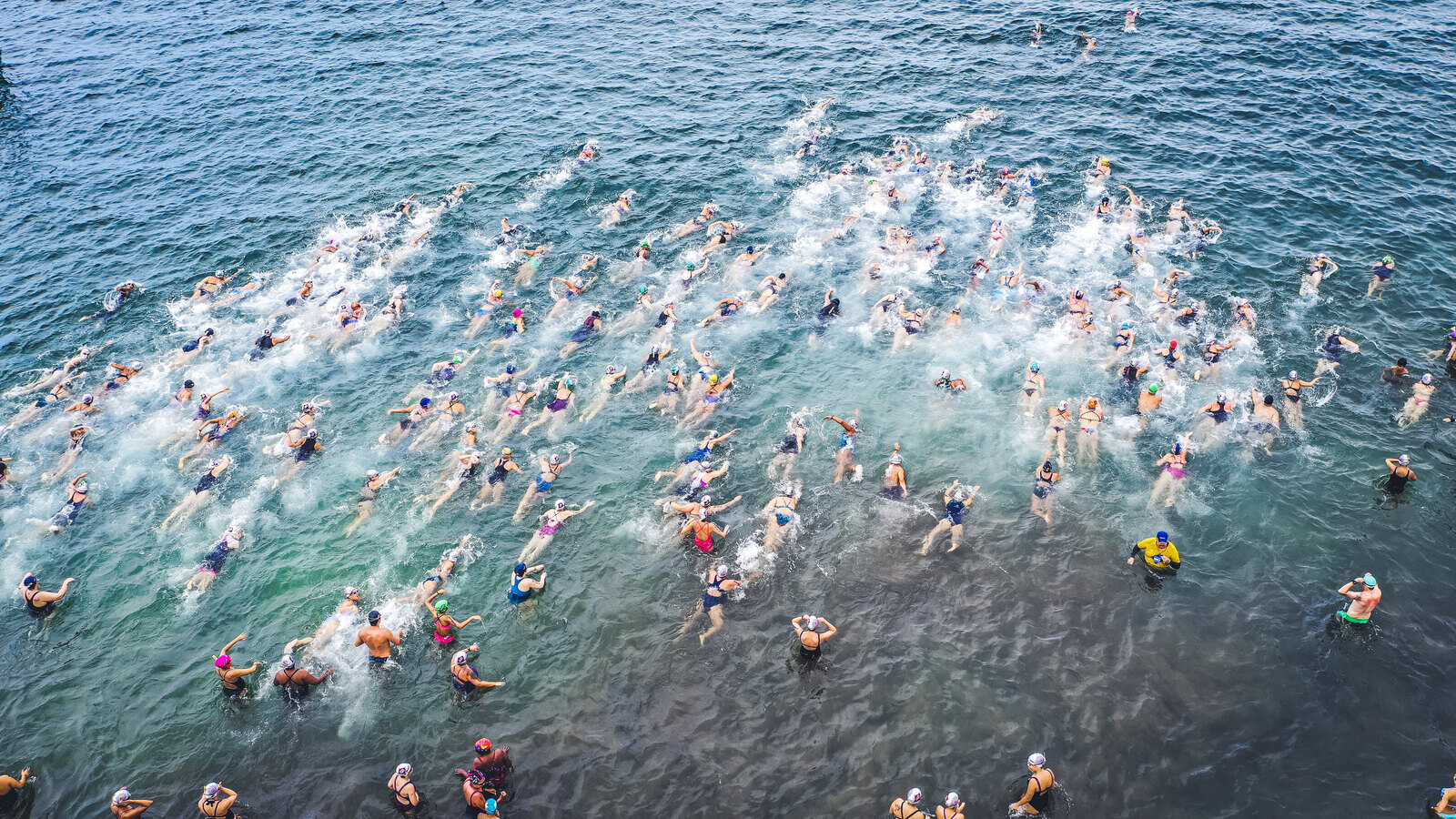
The gun goes off. A hundred pairs of arms hit the water at once. Adrenaline says swim like it is for a medal, and that is exactly how the race gets ruined. The swim leg of a triathlon is not a discipline anyone wins. It is the distance where it is easiest to lose the day.
The swim is the commute to the real race
A strong swim gives a real edge to the narrow front of the field. For everyone else it changes little, because the few seconds gained in the water disappear in the first minutes on the bike, especially after climbing out gasping and over-acidified. That is why experienced age-groupers treat the swim as transport to the start of the bike and run, since that is where the triathlon is actually decided.
Control does not mean holding back. It means a pace that can be held without panic, one where breathing stays under control. In practice, that is what decides the state in which the athlete reaches transition.
The first 200 metres: survive the chaos
The start can be the hardest moment of the entire day. High heart rate, a forest of flailing arms, water in the face, and few chances to breathe. The body demands more speed right then, when it needs exactly the opposite.
The plan for the first 200 m is simple: breathe more often than feels necessary, and swim slower than feels right. Give it two or three minutes to settle the heart rate. Only once breathing has evened out should pace build gradually. Athletes who go off at full power tend to slow more in the second half, and they also come out of the water more fatigued than those who started calmly.
Starting position: line up with a plan
The simplest way to avoid the washing machine is to start from the side of the line, taking a line to the first buoy from the edge of the field. It looks like extra distance, but on a typical course the difference works out small. In exchange, the water is clear, without elbows in the ribs.
Anyone who feels confident and can draft off other swimmers’ feet can line up closer to the middle. When the start causes stress, staying at the side is the better call.
Pace and rhythm: shift gears
Swim pacing is not one fixed speed from buoy to buoy. It is closer to shifting gears: harder off the start and at turns, easier on the straight stretches. Stroke rate gets adjusted to conditions, shorter and faster in chop, longer on flat water.
The best reference point is CSS, critical swim speed, a threshold pace worked out in the pool. Holding a pace close to CSS, or slightly slower, keeps the whole tank of energy from going in the first quarter of the swim. Anyone who does not know their numbers should start by working out their threshold swim pace.
Takeaways for the next start
- The first 200 m slower and with more frequent breathing than adrenaline suggests.
- Starting from the side if the start tends to be a stress point.
- Pace close to CSS instead of swimming by feel.
The swim exists to get an athlete to the bike in one piece, not to leave them drained before the race actually starts.