
Sighting in Open Water: How to Swim a Straight Line
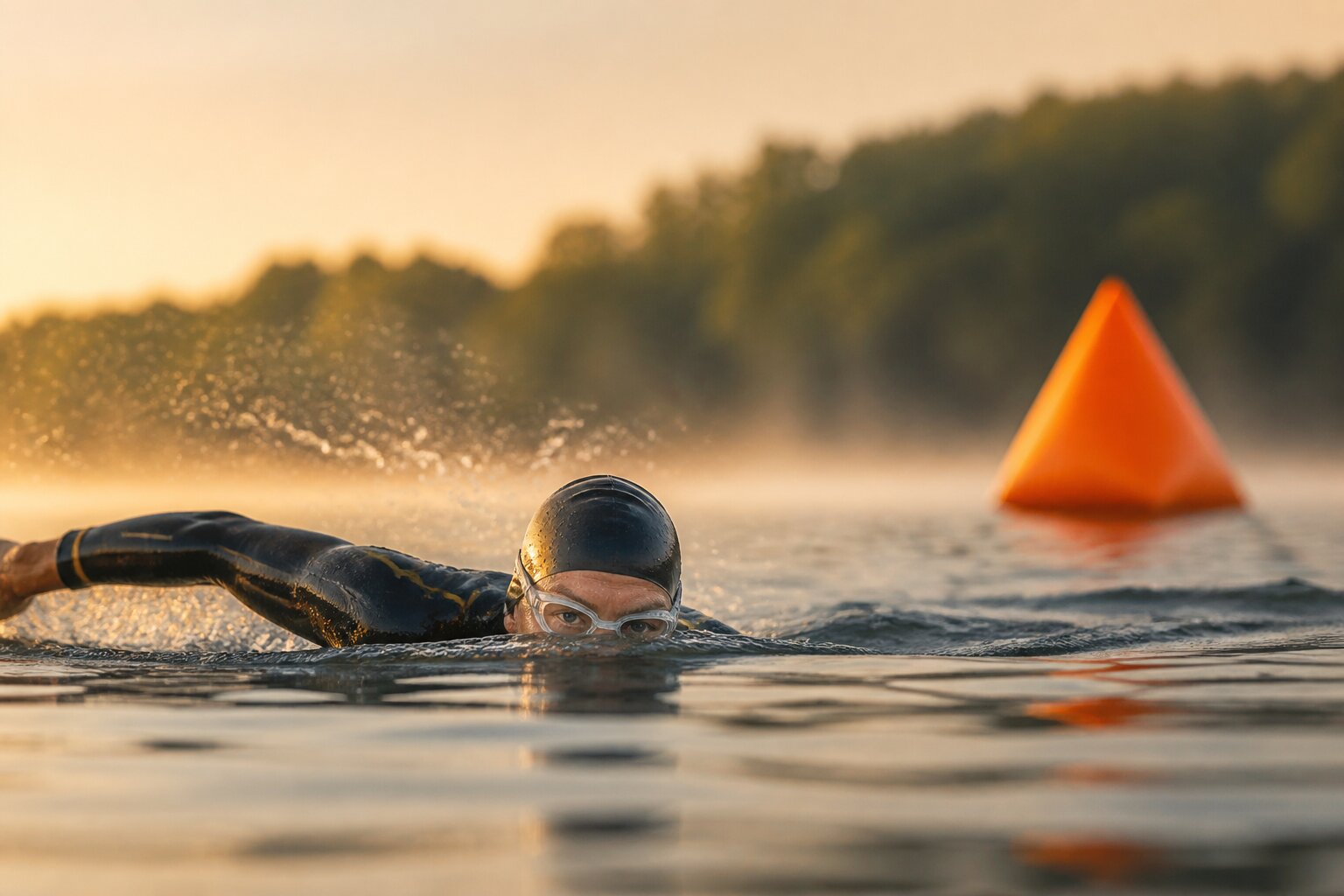
In a pool, there is a line on the bottom and a wall every 25 metres. In open water, there’s nothing. That’s why two swimmers with an identical pace can exit the water at very different times: one held a straight line, the other zigzagged and added hundreds of extra metres. The skill that decides the difference is sighting, a controlled glance at the buoy. Here is how to do it well without losing pace.
Crocodile eyes, not a raised head
The most common mistake is lifting the whole head out of the water. A high head pushes the hips and legs down, which slows you and wastes energy. Instead, use the crocodile eyes technique: lift your head only enough to clear your eyes above the surface, take a quick look, and drop your face straight back down. Surface as little as you need to, not a centimetre more.
Combine sighting with breathing
Sighting the buoy and breathing are one movement, not two. Look forward at the buoy first, then rotate your head to the side to take a breath: sight, then breathe. This way you avoid adding a separate, costly head lift to every stroke cycle. Kick a little harder at the moment you sight, to hold speed and stop your hips from dropping.
The three-look rule
A reliable system: sight two to three times in a row, every other arm stroke. The first look locates the buoy, the second corrects the angle, the third confirms direction. Then swim blind, straight, for 20 to 30 seconds and repeat. You don’t need to look on every stroke, that only slows you down. Adjust frequency to conditions: sight more often in chop and with sun in your eyes, less often on calm water.
Training: start in the pool
Sighting isn’t something to practise for the first time on race day. Build it into pool sessions: every few strokes, lift your eyes and look at the wall as if it were a buoy. Practise bilateral breathing too, a symmetrical breathing pattern keeps the stroke balanced and limits the natural drift to one side that pulls many swimmers off course. In open water before a race, swim a few stretches sighting on a fixed point on shore, to check how much the current or wind is pushing you off line.