
Bike Repair Kit for Triathlon: What to Actually Carry
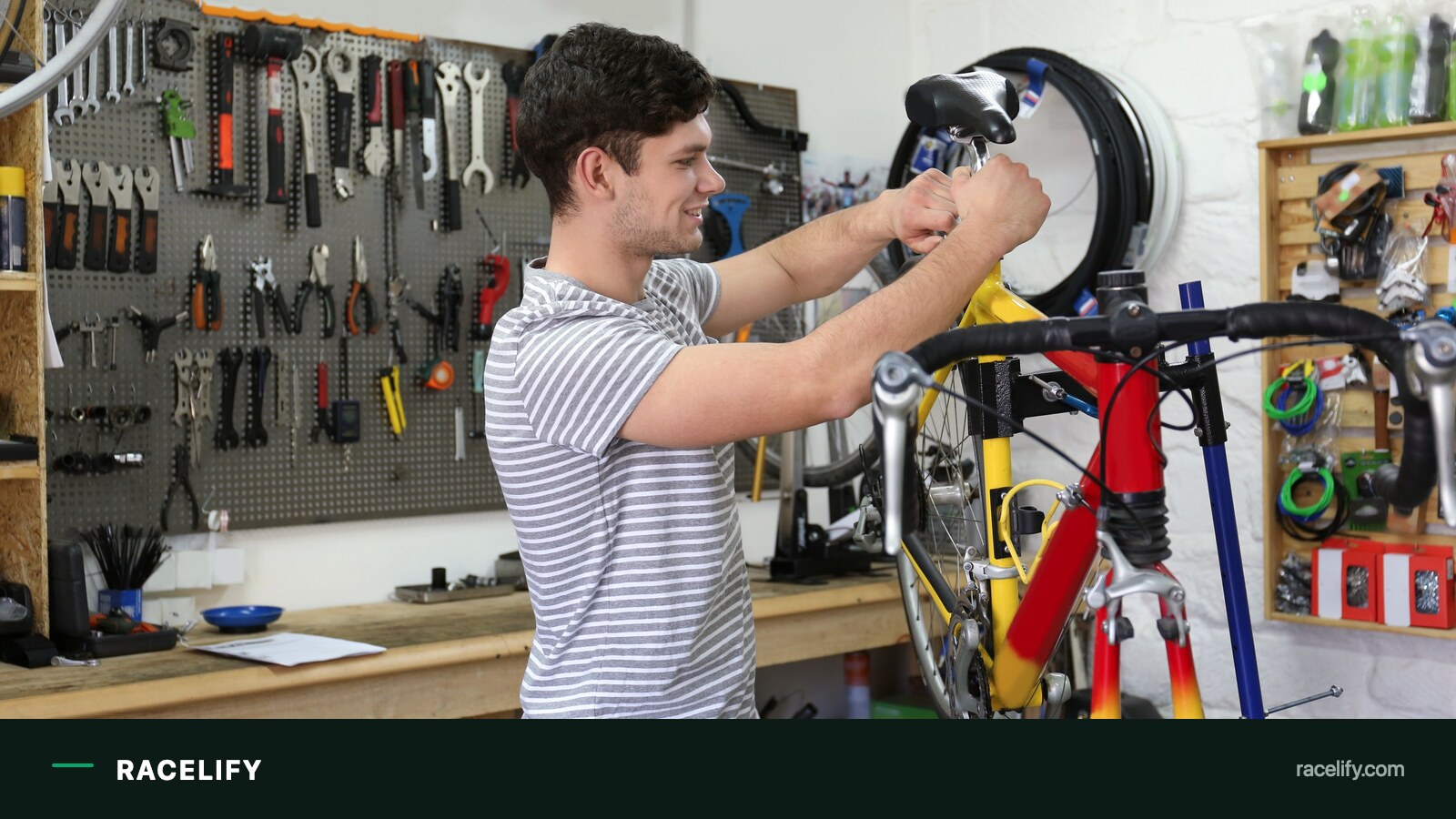
You spend a fortune on a time-trial bike, wheels and an aero helmet, then puncture at kilometre 40 and stand in a ditch because you have nothing to fix it with. Triathlon has no team car following you like professional cycling does; you are on your own. A small saddle bag with the right kit is the difference between a finish time and a DNF. Here is what actually needs to be in it.
The basics: tube, levers, something to inflate with
Three things you do not leave the house without:
- A spare inner tube in the right size (700×25 to 28 for road). One is mandatory, and on longer distances consider carrying two. The cost is trivial, roughly $3 to $7 per tube.
- Tyre levers, minimum two, ideally three. Without them a tight aero tyre can refuse to come off the rim by hand.
- A CO2 inflator or a mini pump. CO2 is fast and light but gives you a limited number of shots. A classic mini pump is slower but never runs out.
That is the absolute minimum. Without those three, you are stuck on the course.
CO2 or mini pump: make the choice deliberately
This is a long-running argument. CO2 inflates a wheel in seconds and weighs almost nothing, ideal for race day, where time matters. The downside: one cartridge is roughly good for one wheel, so a second flat can leave you with nothing left. A mini pump is heavier and takes arm work, but gives unlimited attempts, making it the safer choice for training and long rides.
A sensible race-day compromise: a CO2 pump plus two cartridges plus a small backup hand pump. A Btwin road CO2 pump with a 16g cartridge included, sold through Decathlon, retails for €14.99 in the EU. If you want more accessories in the kit, options like the BBB Co2 EasyAir (AU$44.99) or a compact ROCKBROS mini CO2 inflator at about $25 are also on the market. For the backup hand pump, get a compact model that fits inside the saddle bag; it weighs a few dozen grams and will save you when the cartridges run out.
Multitool: small, but it saves your race
A loose stem, slipped aerobars, a clicking saddle: vibration can work a bike loose mid-ride in triathlon. A multitool with a full set of Allen keys (usually 2 to 6mm) and Torx bits lets you tighten whatever has worked loose before it turns into a real problem. Pick a compact model that fits in the saddle bag; you do not need a full workshop, just the sizes you actually use.
Where to pack it all
The simplest answer is a saddle bag. Decathlon’s Easy M saddle bag kit, a 0.6-litre bag with a multitool and three tyre levers included, retails for €15.99 in the EU. Add a tube and CO2 cartridges and the kit is complete. On a time-trial bike, where aerodynamics matter, the alternative is a frame storage box or a rear wedge integrated with the bottle cages.
The rule is simple: pack it once, permanently, and leave it alone. Let the kit live on the bike, not in a drawer you always forget to raid before a ride.
Practise the change before it is real
The best kit in the world is useless if the first time you change a tube is on race day, heart rate at 170 and adrenaline running. Do it calmly at home once or twice: pull the tyre off, swap the tube, inflate with CO2. Three practice runs and you will handle it in a few minutes on the course, not fumble through a panicked quarter hour.