
Alpe d’Huez 2026: Steger Wins, Siffert Completes Hat Trick
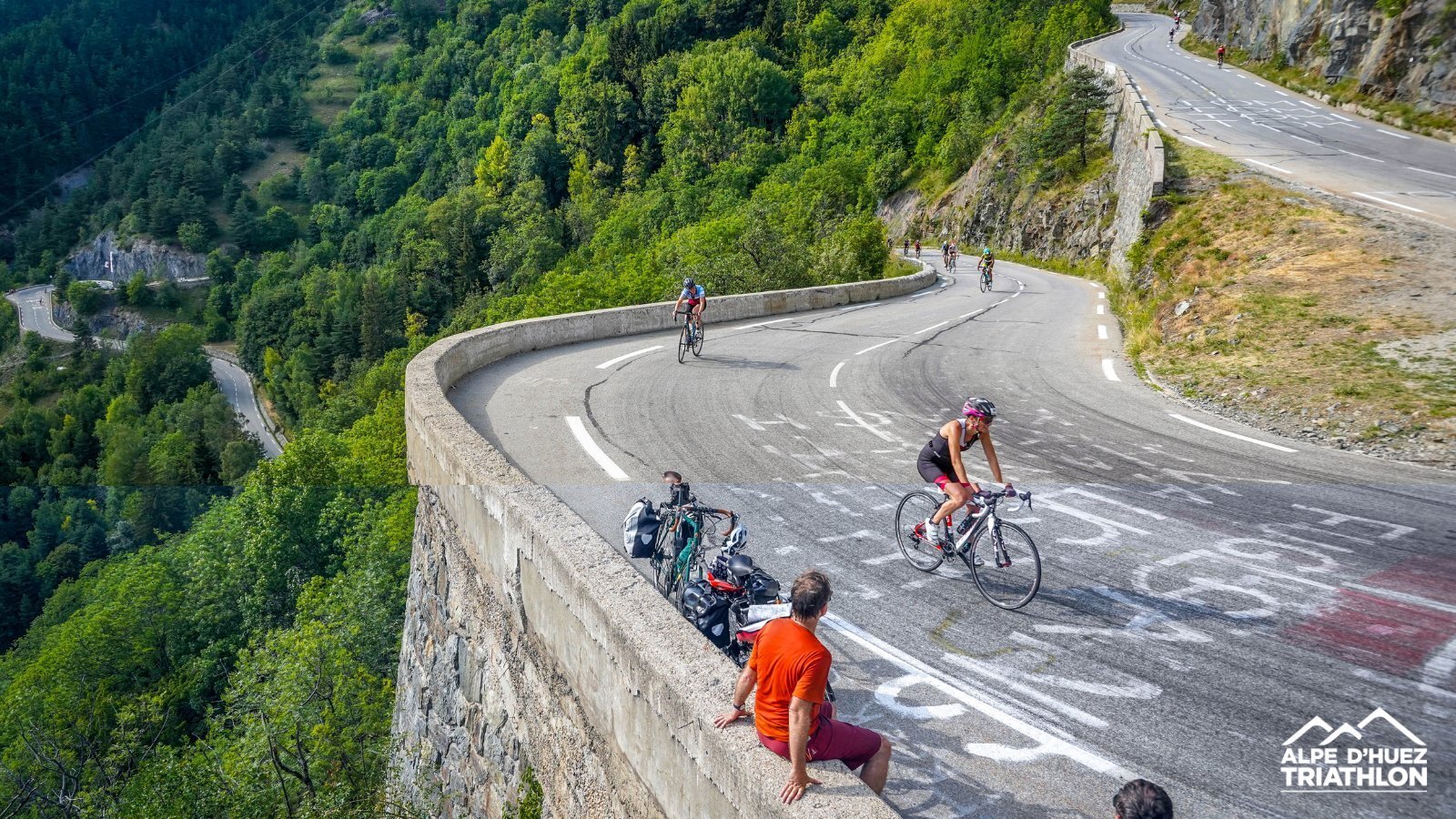
On Wednesday 5 August 2026, the legendary 21 hairpins of Alpe d’Huez tore up the field once again. Thomas Steger won the men’s race. Alanis Siffert, meanwhile, did something only a handful of athletes have managed on this course: a third straight win.
Steger claws back from the swim and wins it on the bike
Coming out of Lac du Verney, France’s Pierre Dupuy held the lead, with Steger well back. The rest of the race, though, turned into a bike power festival. The Austrian weighs 65 kg (143 lb) and rides a 6.9 kg bike, and he steadily clawed back time over the nearly 120 km course. By the finish in Alpe d’Huez he was already in the lead.
Final time: 5:33:41, a clear step up from 2025, when Steger had to settle for bronze. Silver went to France’s Emile Blondel-Hermant (5:36:07), winner of the Alpe d’Huez Duathlon two days earlier. Bronze went to another Frenchman, Louis Richard (5:38:48), who posted the fastest bike split of the day, 3:47:46, but didn’t have enough in hand from the swim to convert it into a higher finish.
The fastest run of the day, though, belonged to someone else: Pol Le Bot, in 1:08:00.
| Place | Athlete | Country | Time |
|---|---|---|---|
| 1 | Thomas Steger | Austria | 5:33:41 |
| 2 | Emile Blondel-Hermant | France | 5:36:07 |
| 3 | Louis Richard | France | 5:38:48 |
Worth setting against the course history. Steger’s winning time is more than three minutes slower than the one Norway’s Jon Breivold won with a year earlier (5:30:05). That result was, and still is, the course record, and nobody beat it this year. The men’s front pack isn’t getting faster here year on year, even as the opposite is happening in the women’s race.
Siffert completes the hat trick, and keeps getting faster
In the women’s race there was no surprise, only a rout. Alanis Siffert led from the swim and only extended her advantage, posting the fastest run of the day: 1:18:41. The fastest bike split this time belonged to someone else, Jeanne Collonge (4:26:26), though that still wasn’t enough to close the gap to the Swiss athlete.
Siffert won for the third straight year and improved her own result at every edition: 6:20:31 in 2024, 6:18:37 in 2025 and 6:13:00 this time, a year-on-year gain of 5 minutes 37 seconds. A month earlier the Swiss athlete also won Challenge Roth in 8:09:09, becoming the youngest winner in that race’s history and taking the record from Paula Newby-Fraser, set in 1986, which had stood for 40 years.
Behind her finished France’s Jeanne Collonge (6:22:30). In the closing stages she passed Switzerland’s Nina Derron (6:32:12), reversing last year’s podium order.
| Place | Athlete | Country | Time |
|---|---|---|---|
| 1 | Alanis Siffert | Switzerland | 6:13:00 |
| 2 | Jeanne Collonge | France | 6:22:30 |
| 3 | Nina Derron | Switzerland | 6:32:12 |
Siffert has now won all three editions she has started, going faster each year, a genuine trend rather than a one-off.
A course that shows no mercy: a lake, mountain passes and 21 hairpins to finish
The Alpe d’Huez Triathlon L is no ordinary long-distance race. The swim is 2.2 km in Lac du Verney, an artificial reservoir in the valley below Bourg-d’Oisans. The bike leg covers nearly 120 km and doesn’t give up a single flat kilometre: three mountain passes first, then, as the main event, the famous 21 hairpins from Bourg-d’Oisans up to the ski station. The run that follows covers more than 19 km around Col de Sarenne, reaching an altitude of roughly 1,800 to 2,000 m, with legs already wrecked by the climb.
Blondel-Hermant warmed up two days earlier
Before the triathlon, the same mountain hosted the Alpe d’Huez Duathlon. On Monday 3 August: a run, a bike leg over the 21 hairpins, then a run to the summit. Emile Blondel-Hermant won it for the sixth time in his career. Two days later he was back on the same mountain and rode to silver in the triathlon. That kind of form across two starts in one week is rare, even in the professional field.
What it means for you
For an amateur racing long distance, this result is a reminder of how much a course profile changes what a finishing time actually means. 5:33:41 over nearly 120 km of Alpine biking is a completely different ride from a similar time on a flat IRONMAN course. Comparing results between events without knowing the course tells you nothing.
You don’t need to take on the full L distance to see these hairpins for yourself. The organiser runs a shorter Triathlon M and a separate duathlon in the same week, the same spectacle with grandstands along the descent, just less climbing.