
The Bottle Between Your Arms: Why BTA Hydration Wins on Aero
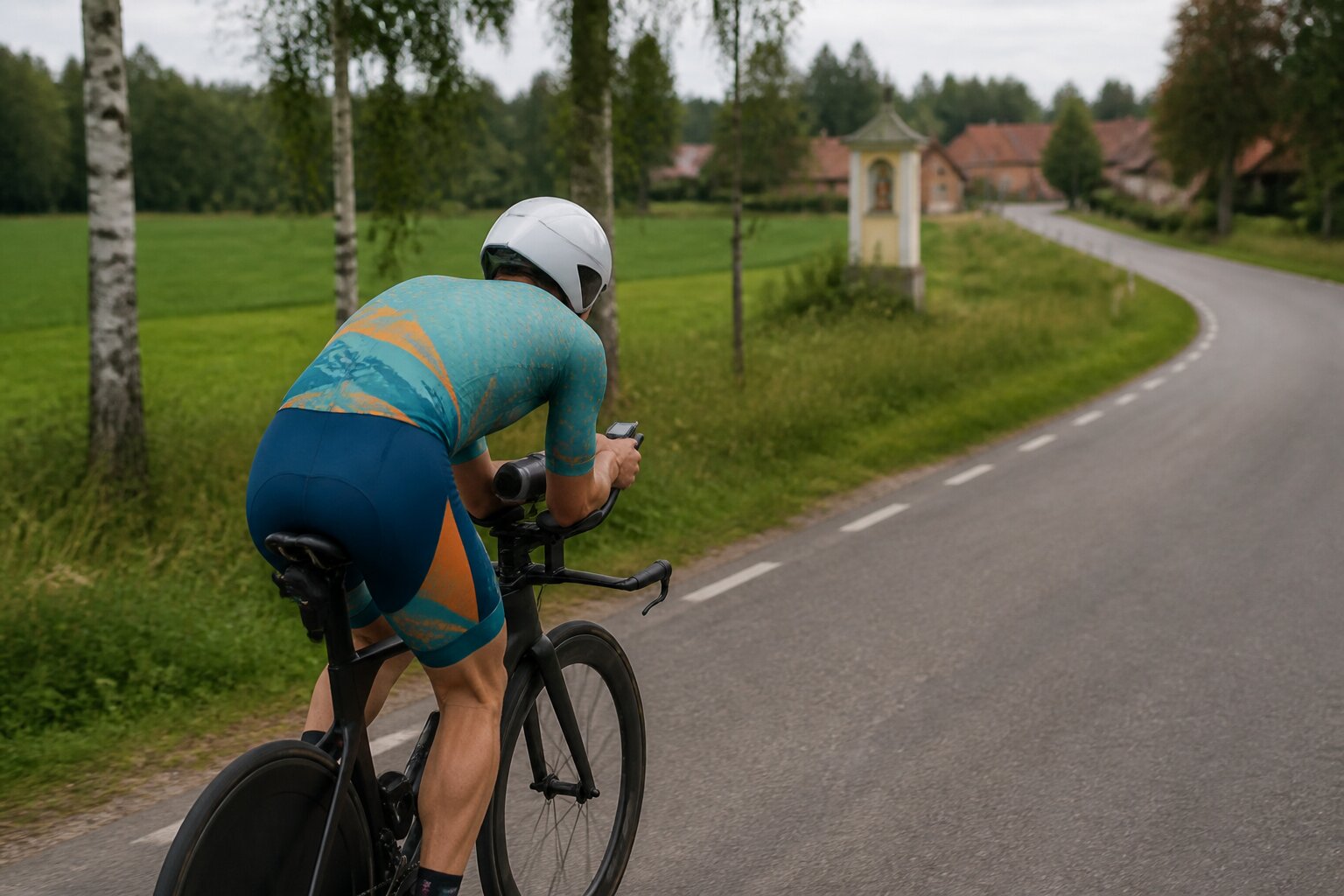
Carrying water on a triathlon bike has one ugly secret: a badly placed bottle costs time. A well placed one can give that time back. The key spot is the space between the extensions, known as BTA, between the arms. That is where a bottle stops getting in the way and starts organising the airflow around the rider’s body.
Why a bottle between the arms can be faster than a clean bike
It sounds like heresy, but the physics holds up. A low pressure zone forms behind the forearms and elbows, a turbulent pocket that generates drag. An aerodynamic object wedged between the extensions fills that gap and directs airflow smoothly along the torso instead of letting it churn behind the elbows. That is why aerodynamics specialists such as Swiss Side argue a well integrated BTA system can be faster than a bike with no bottle at all: it works like a fairing.
The numbers point the same way, though the spread is wide. Wind tunnel tests and CFD simulations put the saving at 5 to 12 W at 40 km/h against a bike with no bottle. In one analysis, a horizontal bottle mounted between the arms cut drag by about 56 g, roughly equivalent to 5.6 W. At a 5 W saving over 180 km, that works out to a gain of roughly two minutes. Fairly reported, some independent testers measured gains under 4 W, and for some riders the effect was zero or even negative. It depends heavily on body shape, setup and bottle profile, so treat these figures as a lab ceiling, not a guarantee.
For comparison, a bottle on the down tube, or worse, two bottles in standard frame cages, is drag paid for across the whole distance. Moving hydration from the frame to between the extensions is one of the cheaper ways to claw back some of those watts without adding a single training session.
Not every aero bottle is equally smart
The most useful feature is not aerodynamic at all: the ability to refill on the move. A sealed aero bottle looks great in the wind tunnel, but at an aid station it forces a juggling act, grabbing a cup from a volunteer, pouring, losing seconds and half the contents. A system with an open top lets the rider pour water in without leaving the extensions.
The second detail is the straw. Drinking through a straw means never taking a hand off the bars to reach for a bottle, and every reach is a moment spent out of the aero position, catching wind with the chest. The third is an integrated computer mount: good BTA systems carry a bracket for a bike computer just above the bottle, so the data sits right in the rider’s line of sight and the whole setup reads as one unit instead of a pile of gadgets.
Specific systems worth considering
The market benchmark is the XLAB Torpedo. The Torpedo System 100 version bundles a composite bottle, cage, aluminium mount and a full set of accessories for 74.95 USD, and the brand’s simpler systems start from a few tens of dollars. The bottle holds about 768 ml, or 26 oz, and two different caps let a rider either refill on the fly or attach a second top up bottle for race day. Outside the US, local VAT and distributor margin sit on top of that list price, so check what a set actually costs in your own market before ordering.
In the same league sit Profile Design, with its HSF and Aeroflow families, and Speedfil’s model A2, a horizontal bottle designed in a wind tunnel whose strength is hiding fluid inside the cockpit between the arms. On a tight budget, many triathletes start with the simplest extension mounted cage and an ordinary bottle. It is not the aero optimum, but it still beats a bottle on the frame and builds the habit of drinking from the aero position.
Remember the fluid limit
World Triathlon regulates how much fluid a rider can carry: up to 4 litres total, distributed evenly on the bike and split between front and back. In practice, that means a maximum of two 1 litre bottles at the rear, and an integrated frame tank capped at 2 litres. Before loading a bike like a camel before the Sahara, check the specific event’s own rules too, since organisers can add their own restrictions.
Verdict
For a rider already on extensions with one aero upgrade left to spend on, a BTA system with a refillable bottle is one of the better buys of the season. It delivers watts without extra training, improves hydration and tidies the cockpit. Start with something refillable, add a computer mount above it, and test drinking through a straw in training before doing it on race day.