
SWOLF and Swimming Economy: Where You Lose Time
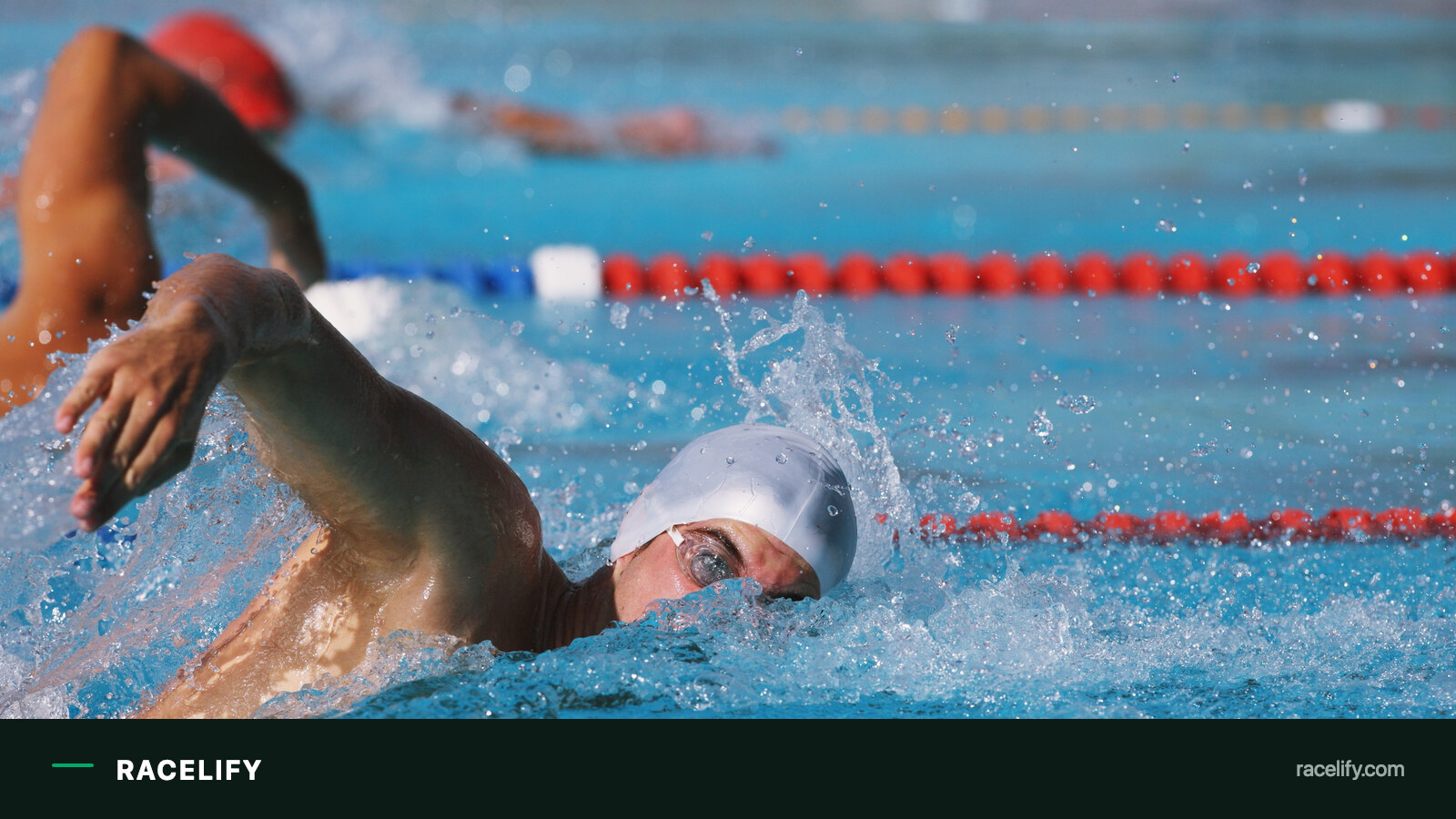
The watch shows you swam 1500 m in the same time as a year ago, despite training more. The problem is rarely fitness. More often it is how much effort gets wasted every hundred metres. That is why SWOLF is worth knowing.
What SWOLF is
SWOLF is short for Swim Golf, and the scoring works exactly like golf: lower is better. Two numbers go into it:
- time to cover one pool length, in seconds
- stroke count over the same length
Add them together. The result is your SWOLF.
Example: you swim 25 m in 35 seconds with 20 strokes (single-arm cycles). SWOLF is 55. Next time you cover the same 25 m in 33 seconds with 18 strokes: SWOLF is 51. That is a four-point improvement, even if the difference was not obvious to the eye.
Why it matters for a triathlete
Runners measure running economy in watts or pace per watt. Cyclists have FTP and TSS. Swimmers mostly measured pace for years, but pace tells you how fast, not how efficient. SWOLF links speed with technique.
In triathlon, fatigue builds through the swim to the finish. Inefficient technique costs energy that will not come back on the bike. Someone with weaker aerobic fitness but better technique often exits the water almost as fast, and with a noticeably smaller energy deficit.
How to measure SWOLF
The simplest way is a sports watch. Garmin, COROS, Suunto and Polar all calculate SWOLF automatically during pool swimming. Start pool swim mode, swim, and the watch counts strokes and time. Once the session ends, there is a SWOLF value per length and an average for the whole workout.
Without a watch, it can be done by hand: have someone time the swim with a stopwatch and count strokes. One measured session a week is enough to track progress.
What the numbers mean
Rough benchmarks for a 25 m pool, freestyle:
- below 35: elite level, rarely seen among amateurs
- 35 to 45: very good efficiency, a technically trained amateur
- 45 to 55: average for regularly training adults
- above 55: significant technical room, the biggest potential for improvement
In a 50 m pool the numbers run higher: a result in the 70s over 50 m is very good economy.
Compare SWOLF against your own numbers, under the same conditions: same pool, similar fatigue. Comparing it against a training partner makes little sense if you have different heights and arm spans.
The trap: a low SWOLF for the wrong reasons
SWOLF drops when you swim slower with long strokes, and rises when you thrash through short, fast ones. Neither extreme is ideal. The goal is the right balance of pace and stroke count, not minimising either number at any cost.
So do not track SWOLF alone. Track it alongside pace. If SWOLF drops by 4 points but pace slows by 5 seconds per 100 m, something has gone wrong.
How to improve SWOLF: three routes
1. Increase distance per stroke (DPS)
DPS, distance per stroke, is how many metres you cover per arm cycle. Longer is better, since it means less work for the same distance. Useful drills: closed-fist drill, single-arm drill, catch-up drill. Each one teaches you to engage the catch before pulling, which produces propulsion for less effort.
2. Cut frontal drag
A great pull can still lose energy if the body is not sitting flat in the water. Legs dropping, the hand crossing the midline on entry, lifting the head to breathe: each of these creates drag that raises the number of strokes needed per metre. Footage shot from the side and from underwater often reveals faults that are hard to feel.
3. Find your optimal stroke rate
Too slow a stroke rate loses momentum between strokes. Too fast and the strokes get short and inefficient. For triathlon distances of 1.5 km and up, most amateurs settle around 55 to 65 cycles a minute, though it is individual. Rather than copying someone else’s rate, adjust gradually and watch how SWOLF responds at a fixed pace.
How much you can gain
Most adult amateur swimmers can improve SWOLF by 5 to 10 points after a few months of consistent technique work. For scale, 10 points in a 25 m pool over an Olympic-distance 1500 m swim means a few hundred fewer strokes, and correspondingly less energy spent, energy that stays available for the bike.
Start with one measured session a week. Write down the result. Come back in a month and compare.
More on this: Cornering and Descending: Where Triathletes Lose Time. Racelify lists open water swims with dates and organiser links.