
Cornering and Descending: Where Triathletes Lose Time
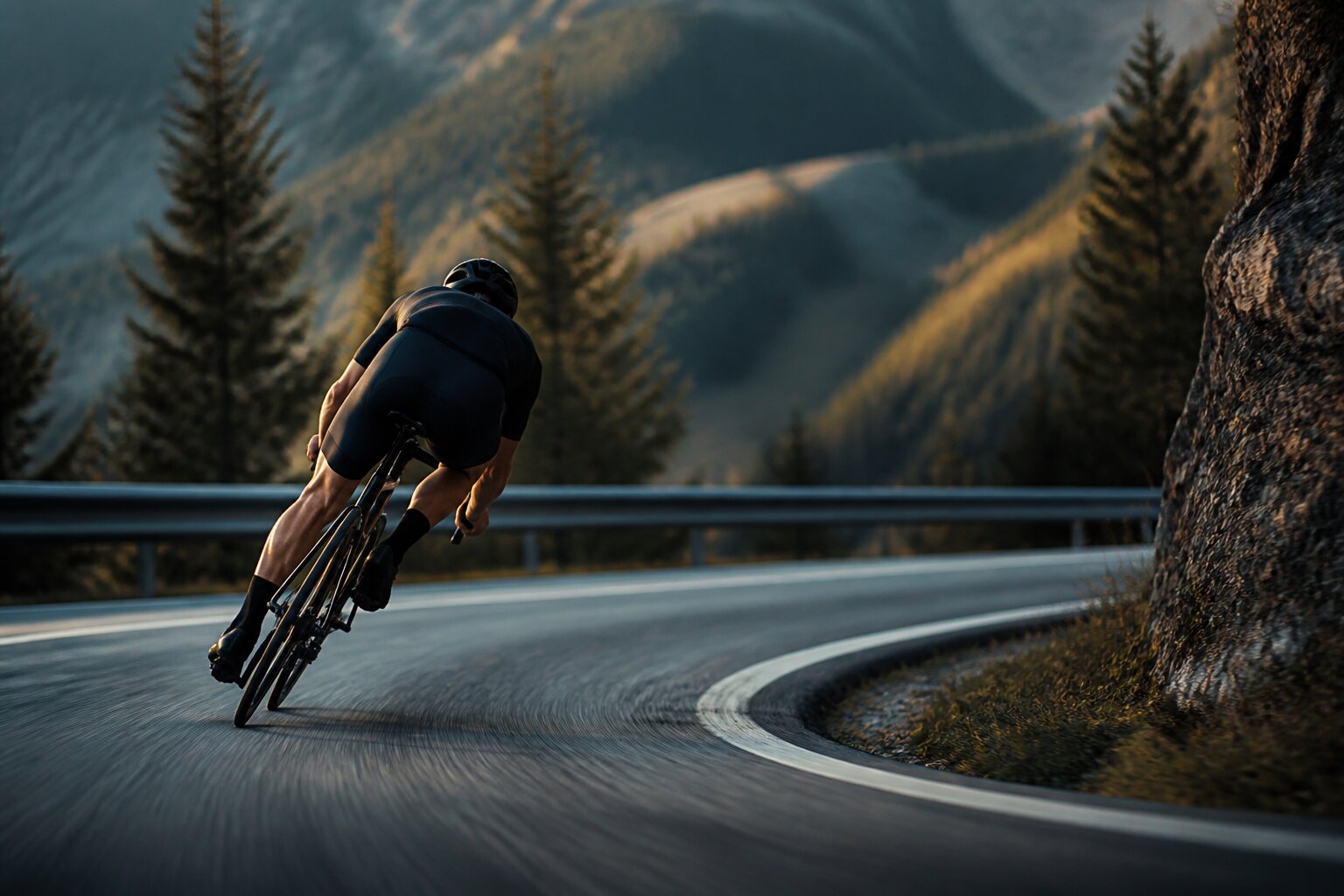
You have trained your FTP, you own an aero helmet and expensive wheels. Yet at every corner you brake down to walking pace. You lose distance that you then claw back with brutal effort. Triathletes often ride solo, so cornering technique rarely gets any real practice. On a twisty course it is technique, not raw power, that decides the result. The good news is that cornering and descending can be learned.
The corner starts on the straight
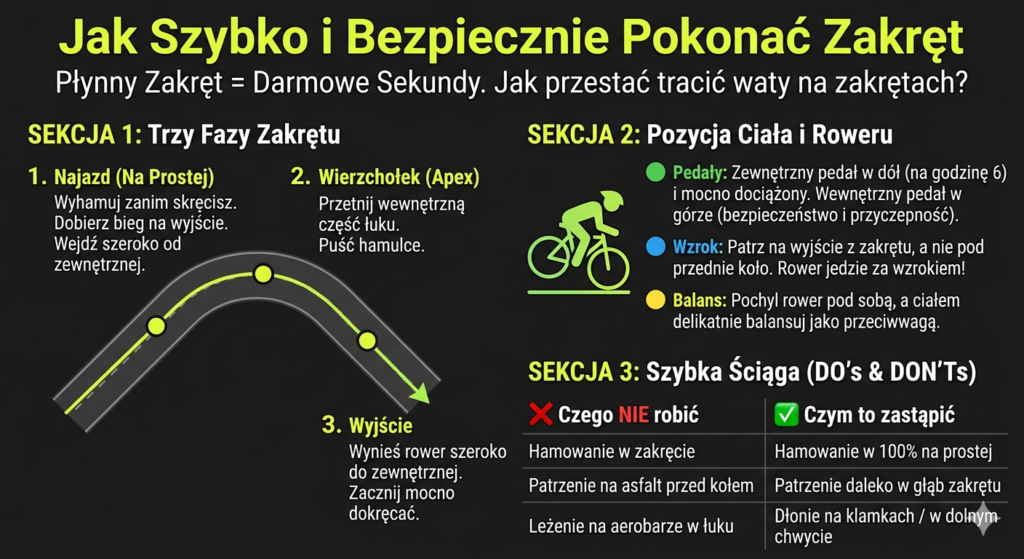
The most important part of a corner is the approach. That is where the key decisions get made. The rule is simple: do all your braking on the straight, before you lean the bike over.
Once the bike is leaned, the tyres need to hold grip through the arc. Braking mid lean is the fastest way to slide a wheel and crash.
The ideal line fits in three words: enter wide, clip the apex, exit wide. A wide arc lets you carry higher speed. Pick the right gear before you enter the corner too, so you can accelerate hard the moment you are through it.
Outside pedal down
This is the detail that changes everything. In a corner, set your inside pedal up. Shift your full body weight onto the outside pedal, down.
That lowers your centre of gravity and presses the tyre harder into the tarmac, so you get maximum grip.
You steer a bike mainly by leaning it, not by turning the bars. Lay the bike underneath you and use your body as a counterweight. Straighten the inside arm slightly. Most important: look where you want to exit, not at the front wheel. The bike always follows your eyes.
A descent is no place to panic
Confidence on descents and in corners comes from the same fundamentals. Riders who fear speed brake too hard and lose valuable momentum. Instead of grabbing the levers, apply these rules:
- Smooth modulation: feather both brakes lightly at once. Avoid sudden inputs that lock the wheels.
- Safe hand position: on a straight descent you can stay on the extensions. Once corners appear, move your hands to the drops or the hoods immediately. That gives you full control with the brakes under your fingers. The aero position does nothing for you if fear makes you brake to a standstill.
How to practise it
Most mistakes come from panic and poor position, not from weak tyre grip. Practise somewhere safe, away from traffic:
- Figure eights in a car park: find an empty lot. Ride tight figure eights, going lower each time. You will find out exactly how much grip your tyres have.
- Deliberate line: on a familiar, safe loop, practise entering wide and aiming for the apex. Repeat until it becomes automatic.
- Gentle descents: start on shallow hills. Drill your brake modulation and a stable position before you take on real climbs.
Twisty courses are ahead this season, and the seconds technique buys you come free. They cost not one extra watt.