
Open Water Drafting: Save Your Legs for the Run
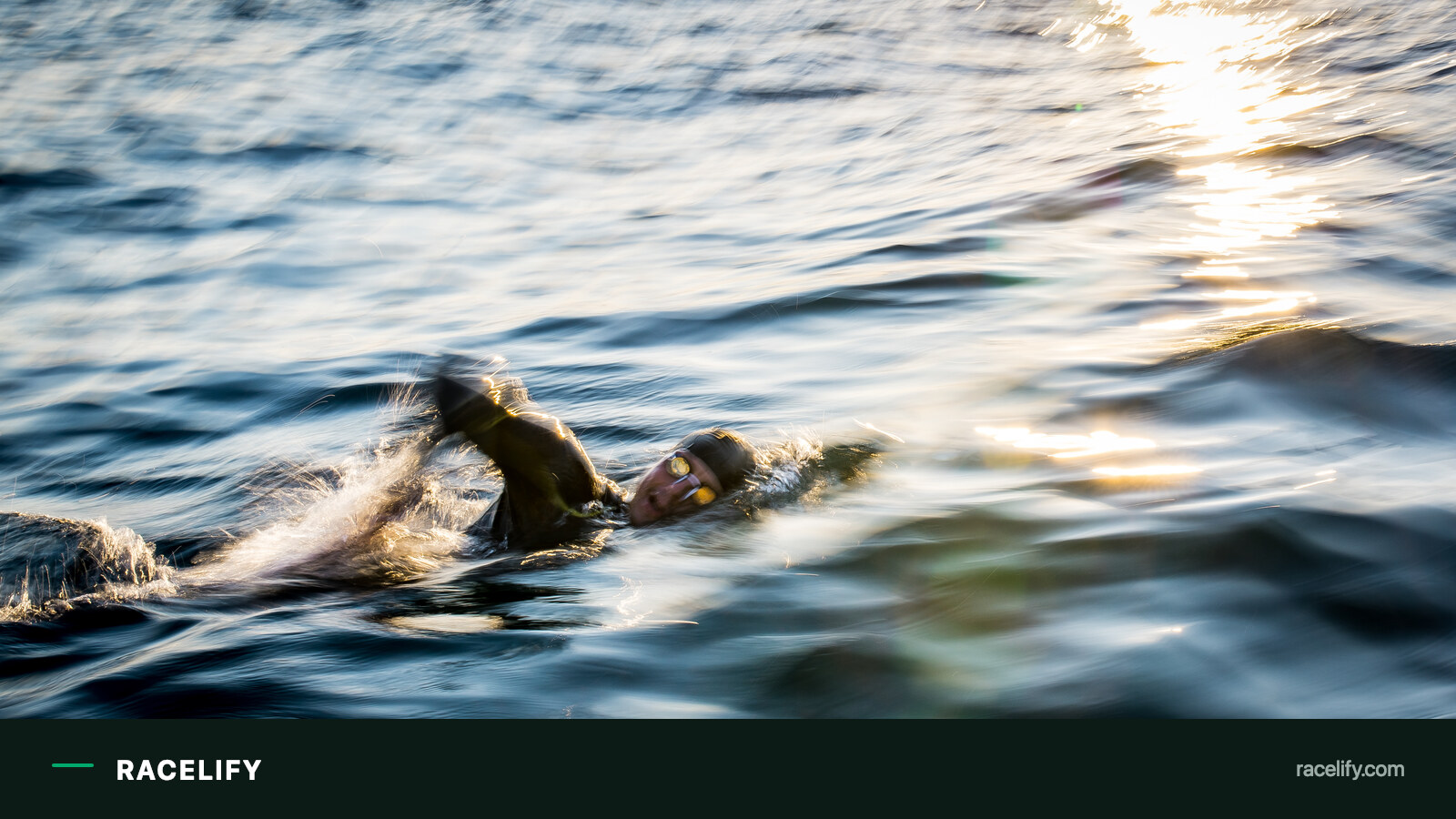
Drafting is banned on the bike in triathlon, but in the water it’s completely legal. It’s the only part of the race where you can tuck in behind a rival, swim their pace, and save the energy you’ll be short of on the run. Amateurs routinely waste this, swimming alone alongside a group instead of latching onto its back.
Why drafting works in the water
When you swim, you push a wall of water ahead of you. The swimmer in front breaks that wall, and you move into the lower-resistance zone left behind them. Less resistance means a lower energy cost at the same speed, or a higher speed at the same effort.
A well-known study by Chatard and Wilson found that swimming in the draft cuts oxygen uptake by about 10%, with heart rate, lactate and perceived effort dropping alongside it. Resistance drops more, by around 20%, than energy cost does. Swimming in someone else’s tunnel is less efficient than swimming in open water yourself would be if resistance were the only factor, but still far cheaper than swimming solo. In practice the difference shows up most on long distance, where every percentage point saved means fresher legs coming out of the water.
Feet or hip: two schools of drafting
There are two main positions you can take.
- On the feet. You swim right behind the leader’s toes. This gives the biggest resistance reduction, because you’re sitting directly in their tunnel. The downsides are no visibility ahead, the risk of a kick to the face, and the need to match pace exactly. Ease off for a moment and you drop out of the zone.
- On the hip. You sit slightly to the side, roughly level with the leader’s hips. The resistance reduction is a bit smaller than on the feet, but you gain two important things: you can see where you’re going, and you need to sight less often. Fewer head lifts mean less disruption to body position and less wasted energy.
For most amateurs, the hip position is the more practical choice. It gives better visibility, less risk of a kick, and more control over the situation. The feet position is worth trying only when you know the leader’s pace well and trust them not to drop you.
How to catch and hold a draft in practice
A few rules keep you out of trouble and save seconds:
- Pick the right feet. Stick with someone swimming slightly faster than your solo pace, but not so fast you blow up after 200 metres.
- Position yourself before the start. In the start zone, line up next to someone at your pace rather than wherever there happens to be space.
- Sight less often, but smarter. On the hip you’re relying on the leader to navigate for you. Check direction every few breaths, not every other stroke.
- Don’t crowd the leader’s back. Constantly tapping their feet is the fastest way to make them speed up or lose you on purpose. Leave a few tens of centimetres of space.
- Practise it in the pool and in open water. Drafting is a skill, not an instinct. Try swimming on a training partner’s feet in practice before attempting it in a race-day crowd.
Start with one thing
If you’ve been swimming solo so far, don’t jump straight into the feet position in the middle of a crowd. At your next race, do one thing: find someone at your pace and settle on their hip. That’s it. You’ll feel the difference by the first buoy, and your legs will thank you on the run.
The next piece of the same puzzle is Sighting in Open Water: How to Swim a Straight Line. When the training is ready for a start line, Racelify lists open water swims.