
Screenless Heart Rate Bands 2026: Five Models Ranked
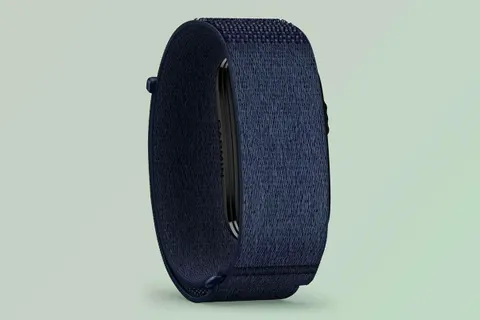
You sleep with a band on your wrist because it promises to track recovery and HRV around the clock. The problem: if the device loses your heart rate mid interval, or misses that you trained at all, the “training readiness” score on your phone is fiction. Ray Maker of DC Rainmaker spent several weeks testing five such bands on multiple people at once, worn on the wrist and on the biceps, using Polar H9 and Garmin HRM-600 chest straps as the reference. The results differ more than manufacturers would like to admit.
The CIRQA and the Fitbit Air have already had their hardware launches covered. What matters now is different: which of the five models actually measures what it promises, and whether any of them make sense for a triathlete as a recovery tool rather than a training tool.
Why the biceps beats the wrist
All these bands measure heart rate optically (PPG): an LED shines through the skin, photodiodes pick up the reflected light, and an algorithm extracts a pulse wave from it. At the wrist, two things corrupt that signal. Cold, because blood vessels constrict and blood retreats from the extremities. And stride rhythm, which can lock the sensor onto running cadence instead of the real pulse. The biceps has better blood flow in the cold and sits further from the jolt of every stride.
Maker measured this directly, the same devices on the wrist and on the biceps, in the same conditions. The finding: every band tested beat its own wrist version when worn on the biceps during training, and for running and cycling, biceps accuracy came close to chest strap level. Sleep runs the other way. The wrist gives marginally more accurate sleep and wake times than the biceps, which loses a little precision when you are lying still under a duvet.
What didn’t add up: steps, intervals, calories
A test using 500 reference steps (walking a known, measured distance) produced a spread that explains the differences in everyday stats: Fitbit Air hit exactly 500, Amazfit Helio counted 505, the Garmin CIRQA logged 509 on the wrist, Polar Loop 510, the CIRQA on the biceps 520, and WHOOP 530.
Automatic workout detection is a different story. Maker ranked all five: 1. WHOOP (excellent, rarely wrong), 2. Fitbit Air (nearly as good), 3. Garmin CIRQA (good, and improving), 4. Amazfit Helio Strap, 5. Polar Loop (barely passing).
The CIRQA has a specific design problem: its heart rate sensor runs in low power mode until the band recognises a workout, at which point it adds power and precision. If it never recognises the workout, that entire heart rate segment simply does not exist. The Amazfit Helio Strap goes the other way. It detects activity eagerly, catching even a short bike ride that no other device noticed, but it ends sessions early and splits interval training into several files if you slow down during a rest. The Polar Loop finishes last and also over counts steps and calories on the bike, turning ride time into steps that never happened.
Sleep comes out similar across the board. No brand has a clear edge in 2026 on sleep onset time or HRV trends.
Separately, treat VO2max with caution. All five estimate it from heart rate and the accelerometer. A meta analysis by the INTERLIVE consortium splits this into two cases. Devices that calculate it from exercise data fall within a range of agreement from minus 9.92 to plus 9.74 ml/kg/min against lab measurement. Those based on resting data overestimate by an average of 2.17, with a spread from minus 13.07 to plus 17.41. Screenless bands without GPS tend to fall into the second group, so a reading of 48 ml/kg/min could realistically mean anything between 35 and 65. Tracking the trend over months is worth doing. A single number is not.
So how accurate is HRV itself
This is the question everything else depends on, since HRV and recovery are exactly what these bands are sold for. The answer is uncomfortable.
A 2025 validation study (Dial et al., Physiological Reports) compared overnight resting heart rate and HRV from five devices against ECG. Thirteen adults, 536 nights of data. The Oura Ring Gen 3 and Gen 4 came out on top, with concordance correlation coefficients of 0.97 and 0.98. WHOOP was moderate (CCC 0.91, mean error 3.00%), and Polar was weak (CCC 0.86). The authors’ conclusion is blunt: finger worn sensors consistently beat the wrist for overnight HRV, because they sit closer to the artery and are less disturbed by movement.
Now the caveat that keeps that number honest. The study did not include any of the five bands in this ranking. It tested a Garmin Fenix 6, the Oura Gen 3 and 4, a Polar Grit X Pro, and the WHOOP 4.0, not the 5.0. There is no independent HRV accuracy validation for the CIRQA, Fitbit Air, Helio Strap or the new Polar Loop.
The practical takeaway: the wrist is the weakest position for exactly the use case these bands are sold on, and none of this specific five has been independently tested for it, only by their own makers.
Ranking: five bands, five different trade offs
1. WHOOP 5.0 (MG)
Type: subscription based band, hardware not sold separately, up to 14 days of battery. Price: no separate device price, you pay for access: from $199/year (One plan) through $239/year (Peak) up to $359/year for the Life tier with MG (ECG, arrhythmia alerts). Verdict: the best workout detection of the five, but you keep paying for it indefinitely. Three years on the cheapest plan comes to more than $600, before you buy a single pair of running shoes.
Best for: someone who wants one polished recovery ecosystem and does not mind a standing monthly cost.
2. Garmin CIRQA
Type: screenless band, one time purchase, 20.7 g, optional Garmin Connect+. Price: $199.99 in the US. Verdict: third place for workout detection, but once it does catch an activity, biceps accuracy for running and cycling matches a chest strap. The problem starts when the CIRQA misses the workout entirely, and it has documented trouble specifically with cycling and strength training.
Best for: a triathlete who already runs a Garmin watch and wants something lighter to wear at night and off the bike, without splitting data across two accounts.
3. Google Fitbit Air
Type: screenless band, one time purchase, 12 g, optional Google Health Premium. Price: $99.99 in the US. Verdict: second for workout detection, and a perfect 500 out of 500 in the reference step test, the most precise step counter of the five. Its workout analysis software is the weakest of the five, though.
Best for: someone who wants passive 24/7 sleep and heart rate tracking and does not plan to rely on it for structured intervals.
4. Amazfit Helio Strap
Type: screenless band, one time purchase, 20 g, no subscription required. Price: $99.99 in the US. Verdict: fourth for workout detection, with a tendency to split intervals into pieces, but for the price you get an optional biceps strap, up to 10 days of battery, and a HYROX mode that recognises 25 strength movements. Not to be confused with the Amazfit Helio Ring, a separate product, a ring rather than a band.
Best for: someone who trains mainly strength or does HYROX and wants to pay once with no subscription, provided they start intervals manually rather than trusting auto detection.
5. Polar Loop
Type: screenless band, one time purchase, 29 g, integrates with Polar Flow (Nightly Recharge, Training Load Pro). Price: $199.99 in the US. Verdict: last in the workout detection ranking, described as barely passing. It also over counts steps and calories on the bike, has no SpO2, and has no vibration motor, so no silent alarm.
Best for: only makes sense for someone already living in Polar Flow who wants their entire training history there. For everyone else, it is the weakest choice of the five.
| Model | Price (US) | Battery | Workout detection (DC Rainmaker) | Water |
|---|---|---|---|---|
| WHOOP 5.0 (MG) | $199 to $359/year (subscription) | 14+ days | 1. | IP68, rated to 10 m |
| Garmin CIRQA | $199.99 | 10 days | 3. | no confirmed rating |
| Fitbit Air | $99.99 | 7 days | 2. | no confirmed rating |
| Amazfit Helio Strap | $99.99 | 10 days | 4. | 5 ATM, does not log swims |
| Polar Loop | $199.99 | 8 days | 5. | WR30, shower and swim rated |
Pool time: water resistant is not the same as lap counting
For a device worn 24/7 by a triathlete, this is the question that should come first, and in most round ups it never gets asked at all. The distinction is simple and important: a device can survive the pool and still not log a single length.
The WHOOP 5.0 is rated IP68, with a claimed depth rating of 10 metres. The Polar Loop is rated WR30, described by the manufacturer as suitable for showering and swimming but not diving with equipment. The Amazfit Helio Strap is rated 5 ATM, the standard for this class, and will survive going into the water, but it does not record swim workouts.
For the CIRQA and Fitbit Air, no confirmed water resistance rating turned up in the source material for this piece, so none is given here. Check with the manufacturer before buying, because none of these five will replace a watch at the pool, and they differ on whether you are even allowed to bring them in at all.
What this means for a triathlete
None of these five bands replaces a watch for training. None has its own GPS, distance and pace always come from the phone, and there is no live wrist pace during a run or ride. They do one job well: overnight HRV, morning readiness, and a week’s sleep trend. That is where they genuinely add something alongside a multisport watch. Wear the band to sleep and through the day, and save the Garmin, Coros or other GPS device for training and racing.
For a brick session with intervals or fast pace changes on the bike, expect none of these bands to catch it perfectly on the wrist, and the CIRQA and Amazfit Helio Strap in particular have a documented problem with exactly that. Moving the band to the biceps for a specific session fixes most of the error, but it is one more thing to pack for training, not something you will do reflexively before every session. Training readiness from a band like this is a hint, not a verdict. If the score says rest and you feel fresh after a day off, trust that too.