
Pacing the Bike Leg: Intensity Factor and First Kilometres
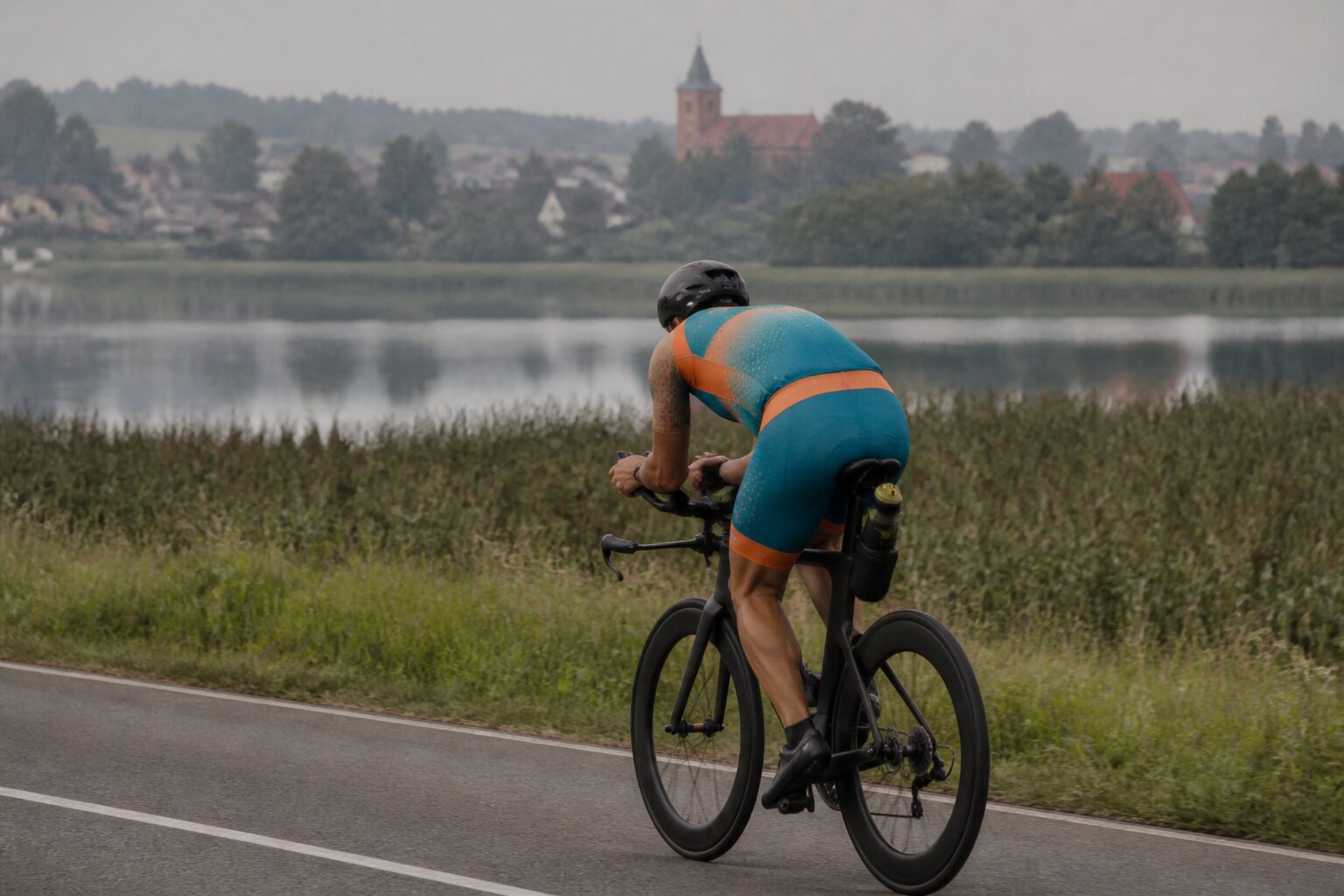
That feeling is familiar: fresh legs, adrenaline from the swim, the group rides away, and suddenly it’s 30 watts more than planned. On the bike, everything feels unstoppable. Then the run starts, and those free watts from the first kilometres turn out to have cost half a marathon. The run decides the triathlon, and most amateurs lose it on the bike already. Time to work this out with numbers, not feel.
Why not ride on feel
After the swim the body is keyed up, and perceived effort can lie. What feels like an easy pace on fresh legs is often a few percent too hard. On the bike, that few percent turns into tens of seconds, sometimes minutes, lost on the run once the legs stop cooperating.
The fix is simple: ride to power, not to feel. A power meter has no mood, does not rev up for the crowd and does not react when someone just passed by. It shows a hard number, and the rider sticks to the plan.
Intensity Factor (IF): the target number
The key metric is Intensity Factor, or IF: the ratio of race normalised power (NP) to threshold power (FTP, the highest power sustainable for about an hour). In plain terms, it’s the percentage of maximum sustainable effort being held. An IF of 0.80 means riding at 80% of FTP.
The longer the distance, the lower that number needs to be:
| Distance | Target IF | % FTP |
|---|---|---|
| 70.3 (half distance) | 0.72 to 0.85 | ~75 to 82% (most aim for 75 to 78%) |
| Full IRONMAN | 0.65 to 0.75 | ~70 to 76% (first-timers 0.65 to 0.70) |
These ranges match TrainingPeaks recommendations and common coaching practice, including Joe Friel. The rule is blunt: the slower the rider, the lower the target should be, because more time on course means more accumulated fatigue. Riding a full-distance bike leg in 6:30 calls for the lower end, around 65% of FTP; riding it in 5:00 allows a higher target, 75 to 76%.
One condition: these numbers only work if FTP is current. Anyone who last tested it in winter should retest the threshold before calculating IF.
Variability Index (VI): the parameter riders forget
IF alone is not enough. Average load can be perfect and the run can still fall apart if the ride itself was ragged. That is what Variability Index, or VI, measures: the ratio of normalised power to average power (NP/AP). It shows how smoothly the power was held.
- VI = 1.0, perfectly smooth riding.
- VI ≤ 1.05, the target Joe Friel gives for a good run off the bike.
- VI clearly above 1.05, riding was surges: hard on the climbs, easing off on descents, sprints out of every corner. That is suicide before a run.
Every surge above threshold borrows energy that gets paid back with interest on the run. The goal is even and smooth, no heroic attacks. Let power rise a little on climbs without going into the red, and keep turning the pedals on descents instead of coasting.
Race pacing: the first 20 minutes is the test
The hardest part of pacing is the start itself. Fresh legs push for more, the group rides away, and the discipline is to ride deliberately slower than instinct wants. This is where the run gets decided.
In practice: hold power a few percent below the target IF for the first 20 to 30 minutes. Let the body shift out of swim mode and into a cycling rhythm. Only move into the target range once heart rate settles. Riders who launch hard off the bike start almost always pay for it in the second half of the run.
Without a power meter: ride by heart rate and breathing
Most amateurs do not own a power meter, and that is not a problem. Good pacing can be built on heart rate and perceived effort too. The principle stays the same: ride with something left, to save the legs for the run. Only the tools change.
- Heart rate, the poor rider’s power meter. Set zones from a threshold test, for example a 20 to 30 minute time trial: average heart rate from the final stretch approximates threshold, or LTHR. On a 70.3, ride just under threshold, around comfortably hard; on the full distance, noticeably lower, in an easy aerobic zone. One catch: heart rate lags and drifts upward on its own in heat and dehydration, so late in the bike leg, don’t chase the number.
- The talk test. The simplest check there is: on a bike leg meant to leave legs for the run, a full sentence should still come out with light breathlessness. Gasping and speaking two words at a time means riding too hard.
- Rate of perceived exertion (RPE 1 to 10). Aim for 6 to 7 out of 10 on a 70.3 and 5 to 6 out of 10 on the full distance. Deliberately a notch lower for the first 20 to 30 minutes, even if the legs ask for more.
- Pace on familiar roads. On a flat, known route, speed can serve as a rough limit, but wind and climbs can distort it, so treat it only as a supplement to heart rate, not a replacement.
The real work happens in training, not on race day. Long rides in the target zone teach what it should feel like: the heart rate, the breathing, the sensation. A few bricks, bike straight into run, show how the legs respond after a specific effort. The better the body is known, the less the numbers on the bars matter.
What to take from this
Three numbers and one rule. IF sets how hard to ride: 0.72 to 0.85 on a 70.3, 0.65 to 0.75 on the full distance. VI keeps the effort even, with a target at or below 1.05. FTP has to be current, or the first two numbers are guesswork. Without a power meter, the same principles carry over to heart rate and breathing. The overriding rule is one: a triathlon is not won on the bike, only lost there. Put the ego away, ride with something in reserve, and the run pays it back in saved minutes.