
Indoor Trainer ERG Mode: When It Beats Riding Outdoors
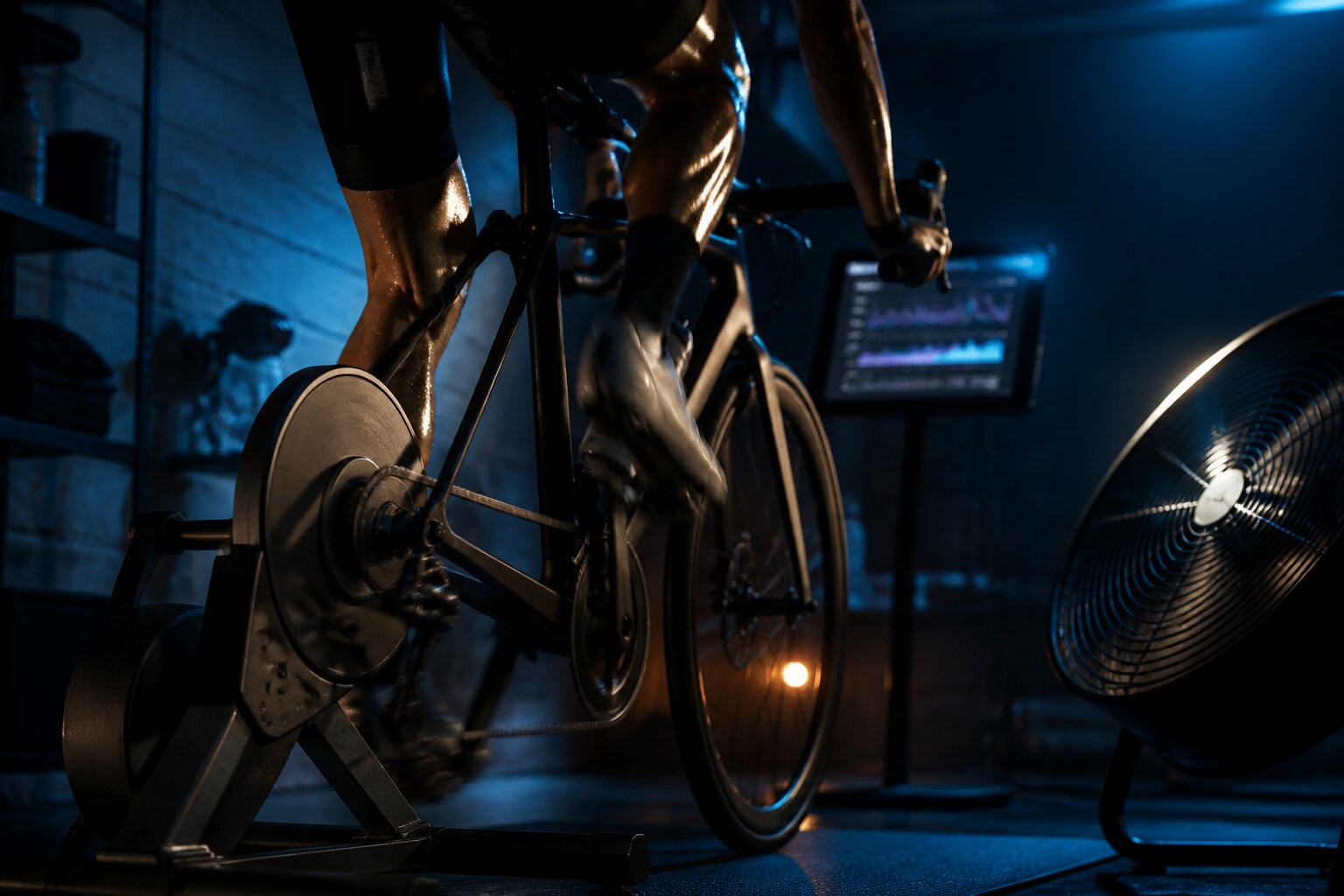
Summer, sunshine, and the trainer comes out in the basement? Sounds like heresy. Yet many triathletes do their best VO2max and threshold intervals in the pain cave, not on the road. The reason is simple: on a trainer, a session comes out exactly as planned, to the watt and to the second.
What ERG mode actually does
ERG is the mode where the trainer manages power itself. Set a target, say 280 watts, and the resistance unit holds that value regardless of how the rider pedals. Cadence changes, power stays fixed: the trainer adds or removes resistance to match. In practice a good trainer holds the target to within a few watts (manufacturers typically claim about plus or minus 2 percent accuracy, though the real figure depends on calibration and how warmed up the unit is).
The consequence is that there is no way to cheat. When fatigue hits and a rider would normally back off a few watts, ERG does not allow it, holding the set power until the interval ends. It is a coach that does not negotiate.
Why short intervals come out cleaner indoors
Picture a 10-minute threshold interval at 250 watts on the road. A junction, a red light, a climb, a car, a gust of wind: power jumps around and the file looks like a seismograph. The average might hold up, but the effort itself is ragged.
The same interval indoors looks like a ruler. Short, precise efforts, VO2max sets, threshold work under 20 minutes per interval, come out cleaner indoors because the noise disappears: traffic lights, traffic, changing terrain. The training file is technically clean, 10 minutes is exactly 10 minutes, and 250 watts is 250 watts. A high signal-to-noise ratio means the data is readable and the rider knows exactly what was done.
Summer adds one more argument: in a basement with a fan, hard intervals happen without a fight against 32°C (90°F) heat, which would cut power anyway. Above about 32°C (90°F), power drops can exceed a few percent even in athletes who are heat-adapted.
What ERG will not give
Precision has a flip side. ERG removes all the variability of real riding: terrain, wind, managing pace while fatigued. Those are exactly the skills that matter on race day, when a rider has to manage power alone on a changing course without blowing up on the first climb.
In other words, a trainer in ERG mode builds the engine but does not teach how to drive the car. Riding the entire winter and spring in ERG only can leave a rider with a great FTP and zero feel for pacing.
The balance: combine both worlds
The strongest athletes do not pick one or the other. They combine both modes. ERG and the trainer handle the precise interval work, building power and VO2max in controlled conditions. Riding outdoors in free-ride mode covers what a trainer cannot teach: pacing, bike handling, feel for the bike, and long, easy volume on real terrain.
A practical split for the racing season: hard, short intervals stay on the trainer in ERG, for a clean file. Long endurance rides and race-simulation bike legs happen on the road, in an aero position, on real terrain. That builds both the engine and the driver.