
Chain Waxing: The Watts You Save and How to Do It at Home
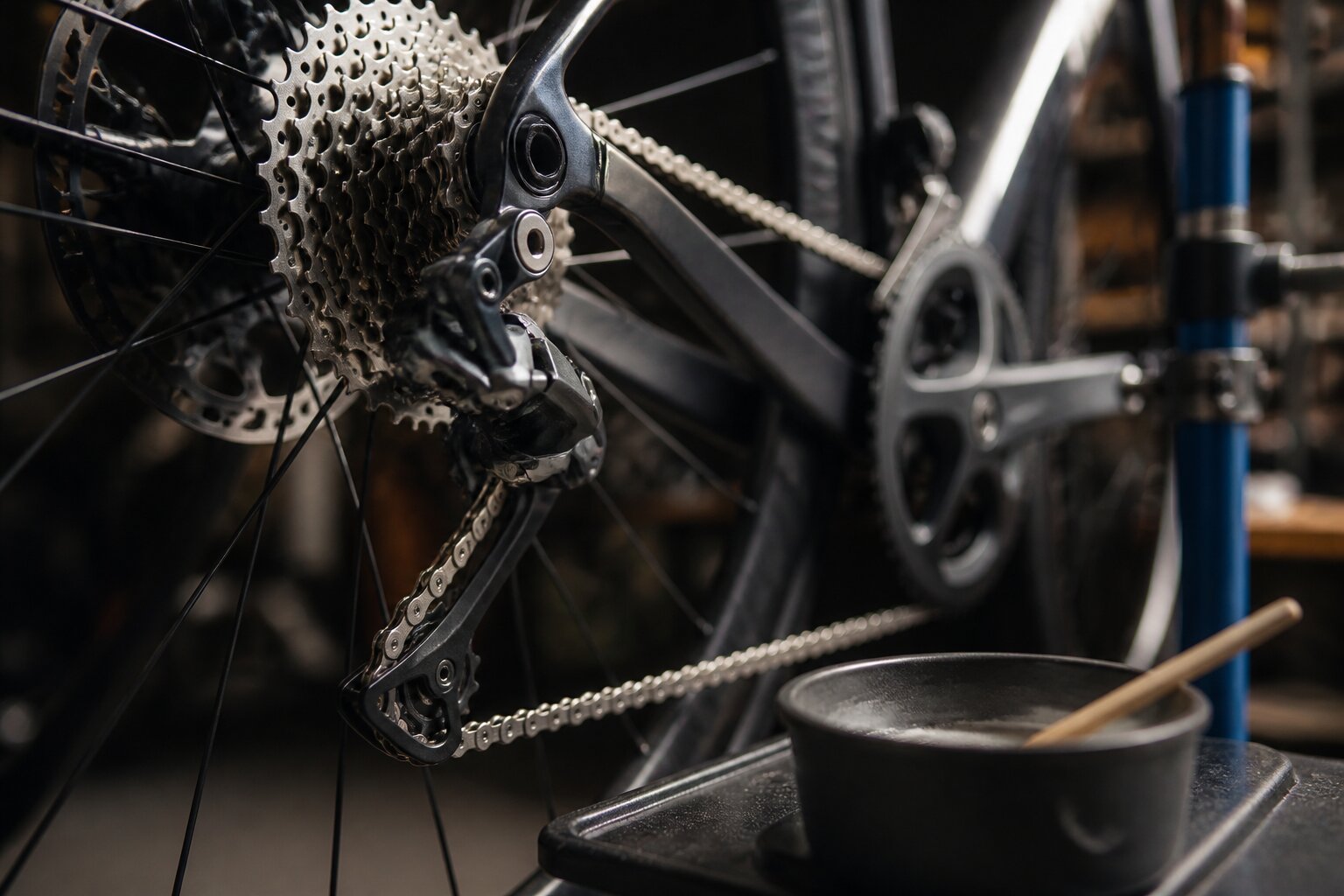
Everyone is hunting for free watts. Thousands go on aero wheels, an aero helmet and a wind-tunnel trisuit, while the chain gets a drop of lube once a month. Yet the drivetrain is the one place on a bike where power genuinely leaks away, and it happens to be cheap to get back. Waxing is not magic. But on a dirty course after 180 km, it can make a difference.
How many watts is this really?
No spin: on a clean chain, the difference between a good wax and the best oil-based lube is minimal. Independent tests at 250 W power showed paraffin was faster by only 0.24 W than the best PTFE-additive oil. That is within the margin of measurement error. If the story ended there, it would not be worth the bother.
The catch is that a chain does not stay clean. After exposing both drivetrains to dust, sand and water, wax’s advantage grew to around 2.5 W. Against cheaper drip lubes, waxing can add another 6 to 8 W. That is real currency, about the same as paying for a more expensive set of wheels.
The conclusion: wax does not win because it is magically slick at the start. It wins because it does not collect dirt. Oil acts like tape for sand; wax dries into a hard shell and abrasive grit simply falls off.
Why wax wears less and protects the drivetrain
Wax has a lower coefficient of friction and, more importantly, it stays inside the rollers and pins, exactly where the chain does its work. A wax bath, dipping the whole chain in melted paraffin, is the current gold standard. Hot wax works into every gap, and once it sets it forms a dry layer that does not attract dirt.
The second benefit matters just as much for the wallet. A waxed chain extends the life of the cassette, chainrings and the chain itself, because grit mixed with oil grinds down cassette teeth like polishing paste. Less abrasive friction means the whole drivetrain wears more slowly.
A bonus worth appreciating in transition: the drivetrain stays clean. No more black tattoos on the calf or grease on the hands before the start.
Wax bath versus drip wax
There are two routes. A wax bath (immersion) gives the best result but means removing the chain, melting paraffin and a bit of patience. Liquid wax (drip wax) goes on like an ordinary lube, straight from the bottle: more convenient, but the layer is thinner and needs topping up more often.
For a triathlete the logic is simple. Anyone targeting a 70.3 or a full IRONMAN and wanting to save every watt over 180 km should do a proper wax bath once a season and top up with drip wax between sessions. Anyone still testing the idea should start with the drip version and judge for themselves whether a cleaner drivetrain is worth it.
How to wax a chain at home, step by step
The first waxing is labour-intensive, because a factory chain has to be completely degreased. This is the most important step: wax will not bond to leftover factory grease. Skip it and the whole job is wasted.
| Step | What to do |
|---|---|
| 1. Degrease | Shake the new chain in a degreaser (such as mineral spirits or denatured alcohol), several baths until it runs clear. This step cannot be skipped. |
| 2. Dry | The chain has to be completely dry. Moisture trapped in wax causes corrosion from the inside. |
| 3. Wax bath | Melt paraffin in a container (an old pot or a slow cooker works), submerge the chain for a few minutes, stir so the wax works into the rollers. |
| 4. Cool and flex | Take the chain out, hang it to set, then flex the stiff chain by hand until it runs smoothly again. |
| 5. Fit | Install it, ride a few metres, done. |
Topping up is simple: once the chain starts to rattle, or after wetter, dirtier rides, repeat the bath or add drip wax. For a wax bath, look for ready-made paraffins such as Silca Hot Melt, Molten Speed Wax or CeramicSpeed UFO. For drip wax, typical products are Squirt or Silca Super Secret, sold at bike shops and larger retailers. Prices shift with the season, so it is worth comparing before buying.
Is it worth it? The verdict
Racing against the clock and counting every watt: yes. Not because wax makes a huge difference on a clean chain, it does not, but because on a real, dusty course it holds its form longer than oil, while also saving the cassette from an early replacement. It is an investment that pays back in watts and in money.
Riding mostly for fun, with no interest in a pot of melted paraffin: a good oil-based lube and regular cleaning will still do the job. Just do not call a drop once a month on a dirty chain drivetrain care.