
Aero Socks: How Many Watts They Actually Save
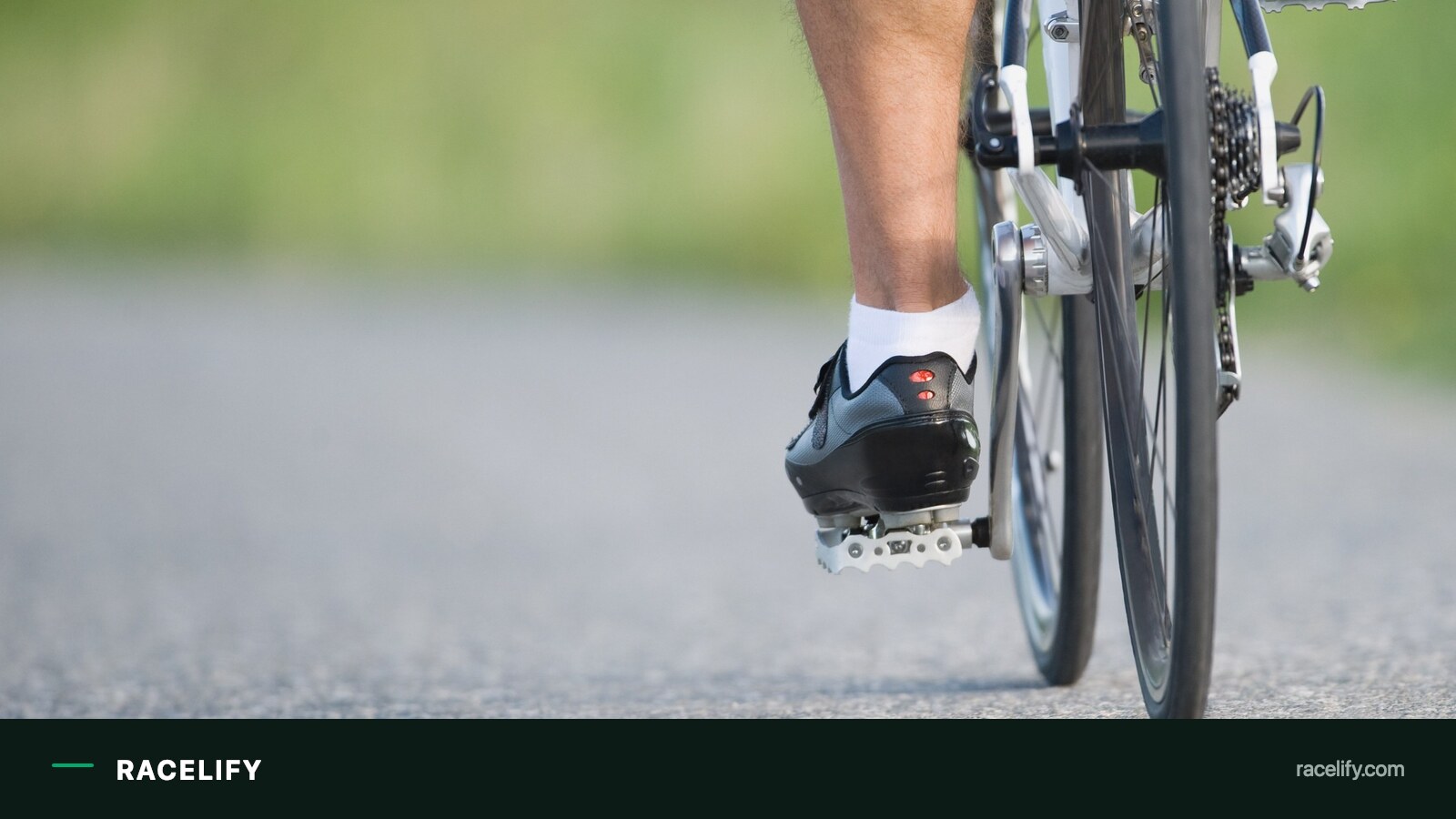
You spend thousands on a bike, a time trial helmet and a wind tunnel fit, then pull on ordinary cotton socks and give away watts for free. Aero socks are one of the cheapest aerodynamic gains in triathlon: tens of USD’s instead of thousands. But how much of that is marketing, and how much is physics?
How it actually works
It sounds absurd: how can a piece of fabric on your ankle change anything? And yet it does. Your calf and ankle are among the body parts that cut through the air with every pedal stroke. Aero socks have a rough, textured surface or pronounced seams that deliberately trigger a turbulent boundary layer around the leg.
That sounds counterintuitive, but that’s the point: turbulent flow shrinks the low-pressure zone behind your leg, the aerodynamic wake that slows you down. A smaller vortex behind the calf means less drag. It’s the same principle behind the dimples on a golf ball.
How many watts: numbers, not promises
Here you need to draw a hard line between lab tests and what you’ll actually see on the road.
Manufacturers like to show their best numbers. Rule 28‘s own tests report a saving of around 8.5 W at 45 km/h, and claim more than 12 W over standard cycling socks at higher speeds. That’s impressive, but note the speed.
Realistically, if you’re riding around 40 km/h or slower, expect 2 to 5 W of saving. Only above 48 to 50 km/h does the gain climb into double digits, because aerodynamic drag scales with the cube of speed. For most age-groupers riding at 32 to 38 km/h, the real gain sits at the low end of that range, but for the price, it’s still one of the most cost-effective upgrades on the whole bike.
A few free watts over a full 180 km bike leg? You take it without thinking twice.
What about the rules?
In road cycling, the UCI regulates sock height: they can’t rise higher than halfway between the centre of the ankle bone and the head of the fibula (Article 1.3.003 BIS). That’s why road-legal aero socks are as tall as the rules allow.
In triathlon you have more room. World Triathlon rules don’t restrict sock height as strictly, so some athletes reach for calf sleeves up to the knee, which are even more aero. Before you put them on for a race, check the rules for that specific event: they can differ between federations and series.
What to look for when choosing
- Height: taller usually means more aero, within the limits your event’s rules allow.
- Texture and seams: these are what actually do the work. A smooth, elegant sock with no texture looks nice but is aerodynamically average.
- Fit: it needs to sit like a second skin. Loose, bunching fabric ruins the whole effect.
- Fabric for the heat: over a full-distance race in the sun, breathability and sweat-wicking matter as much as watts.
There’s no shortage of decent options on the market. Van Rysel, Decathlon’s own brand, sells aero socks developed with pro teams and tested in a wind tunnel, a solid starting point if you want to try the idea without spending a fortune. Rule 28’s socks are the alternative, performing well in independent tests, though at a higher price.
Verdict
Aero socks won’t turn you into Laidlow. But in a world where single watts cost thousands, a few watts for the price of a pair of socks is math that’s hard to ignore. Put them on, forget about them, and go faster on the same legs.
Read next: Aero Wheels: How Many Seconds They Really Give. Racelify lists cycling events, each with a link to the organiser.