
Aero Wheels: How Many Seconds They Really Give
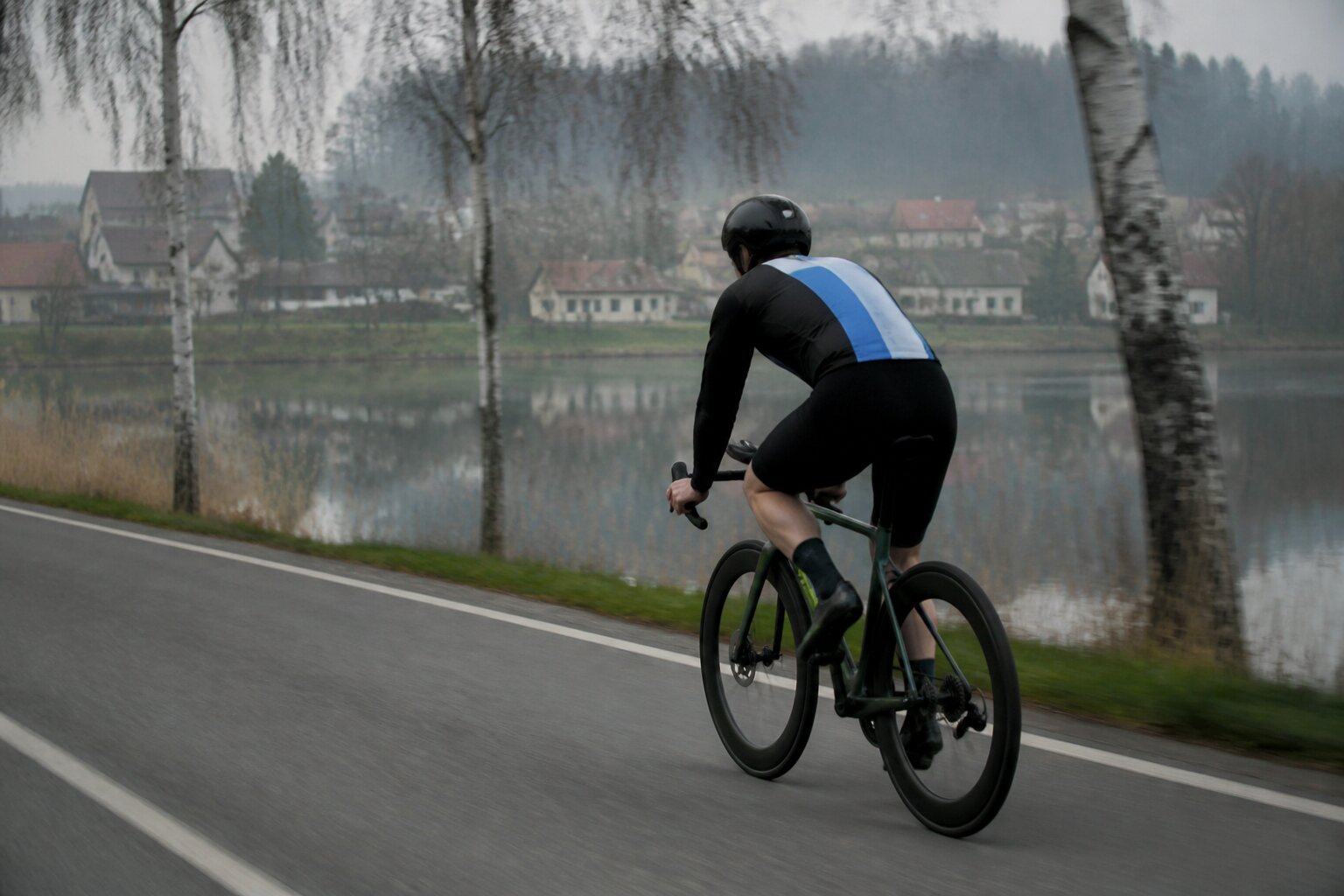
Swap factory aluminium wheels for deep carbon rims and suddenly the bike feels like a motorbike. The question is whether that is physics or a placebo bought at four figure prices. The answer sits in between: aero wheels do cut time, just not where or by as much as most riders assume. Here is the breakdown in watts and seconds.
Where the free watts come from
A wheel is the second-largest surface on a bike hitting the air, after the tyre. A deep aero rim keeps airflow attached instead of letting it tear away, which cuts drag. The effect: at the same power, the bike goes faster, or holds the same speed for less effort.
Wind tunnel numbers are scattered, and that spread matters. Moving from a shallow aluminium box-section rim to a carbon aero wheel can save anywhere from a few watts to several dozen, depending on rim depth, tyre width, speed and rider position. Some conservative tests at 40 km/h show only a few watts of difference; others, at higher speeds and with deeper rims, reach 20 to 40 watts. A more concrete, repeatable reference point: a deep 60 mm wheel alone saves roughly 10 watts over factory aluminium at 40 km/h. That is not a rounding error. It is a difference no amount of training closes in a week.
How many seconds that is on the road
Watts are abstract, seconds are not. 10 watts of savings is well over half a minute over 40 km: at around 250 W that works out to roughly 40 seconds, and the slower the pace, the more time the same wattage saving buys. A full swap from aluminium box-section to carbon aero realistically means several dozen seconds over a 40 km time trial, depending on the models tested and conditions.
The key point: aero wheels work best exactly where a triathlete spends most of their time, on flat ground, at steady, even power. That is precisely the profile of a triathlon bike leg. No surges, no pack to hide in: it is a solo effort, and air resistance is the main opponent. Aero wheels are built for exactly this scenario.
Watt savings vs speed: what deeper wheels give you
Illustrative estimate against a factory aluminium box-section wheel. Drag rises with the cube of speed, so the same wheel yields more watts as speed increases. Anchor point: 50 mm wheels are about 10 W at 40 km/h (wind tunnel test).
0510 15202530 303540 4550 speed (km/h) savings (W) ~10 W @ 40 km/h 35 mm rim (VR 35) 50 mm rim (VR 50) full disc / 80 mmWhere the sweet spot for depth actually sits
This is the most important buying lesson: the biggest performance jump comes from moving off a shallow box-section rim onto an aero profile of 30 to 40 mm. Adding depth beyond that is marginal-gains territory, smaller and smaller returns for more and more money.
In practice, that means a rider on factory aluminium gets the most out of the first decent pair of aero wheels. Going from 50 mm to 80 mm, or to a full disc, is fine-tuning the last few seconds, worthwhile for someone racing for the podium, less so for an amateur chasing a personal best.
| Wheel | Rim depth | Price | Best for |
|---|---|---|---|
| Van Rysel VR 35 Carbon | 35 mm | €799.99 | Riders moving into aero for the first time, hilly and windy courses, anyone who values stability over the last few watts |
| Van Rysel VR 50 Carbon | 50 mm | €899.99 | Flat triathlon courses, a single pair for everything, still manageable in crosswind |
Disc wheels and crosswind: the cost of depth
A full rear disc is the fastest option on a flat, windless course. But depth has a cost: the deeper the rim, the harder the bike is to control in a crosswind. A side gust catches a deep rim like a sail and pulls at the handlebars.
For an amateur, the practical rule is simple: on a windy, technical coastal course, a deep front wheel can be more stressful than it is fast. Many professionals on such courses deliberately run a shallower front, around 50 to 60 mm, and a deeper or disc rear: the front handles steering, the rear handles speed. The rear is shielded by the frame and the rider’s body, so a disc causes fewer problems in the wind.
Before spending the money
Before reaching for wheels in the four figure range, check the cheaper watts first. A good, aero position on the bars saves more than any wheel: the body, not the equipment, is the biggest sail on a bike. A fresh, fast tyre at the right pressure is another set of free seconds. Only once position and tyres are sorted do aero wheels become the logical next step.
If buying, look for a wide rim, 21 to 25 mm internal, matched to wider 28 mm tyres. The market is moving away from 25 mm tyres toward 28 mm, because a wider tyre on a wide rim tends to be both faster and more comfortable. Rims narrower than 21 mm internal are already outdated. The price spread on decent aero wheels is huge, from around €800 for a reasonable set to several times that for the top models, so it is worth setting a budget first and then looking for the deepest rim that fits it without compromising quality.
Picks for the 2026 season