
Zwift 2026: Level Cap Removed, Four Challenge Tiers
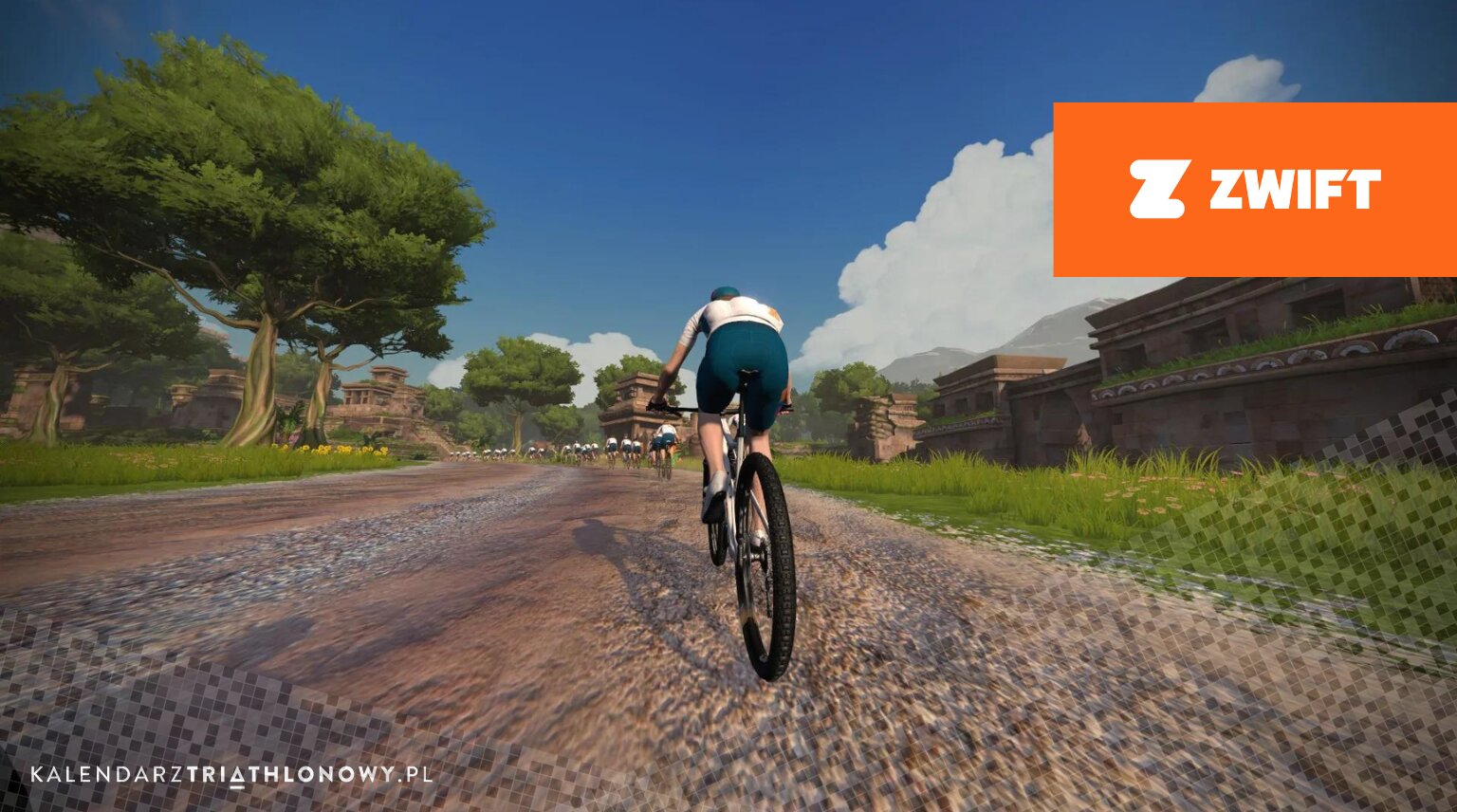
For years, level 100 was a ceiling in Zwift. You reached it and kept riding nowhere, at least in points terms. In the spring/summer 2026 update, the platform removed that cap on the bike and raised the running ceiling from 30 to 50. Alongside it comes a feature that suggests your next workout for you, and a challenge linking indoor trainer riding with real roads.
The end of the level 100 ceiling
As of 29 April 2026, cycling progression in Zwift has no upper limit. Past level 100 there are no more new kits or unlocks, but every further level still costs 50,000 drops, the in-game currency spent on gear in the virtual shop.
Zwift also introduced accelerated experience counting for riders who had been stuck at the century mark for a long time despite continuing to ride. The surplus points convert at a rate of 4:1, so the climb catches up faster than new kilometres accumulate. Runners got the same mechanism in a weaker form, 2:1, along with the level cap rising from 30 to 50. For now there are no new kits for the higher running levels, just the number climbing.
For a triathlete who spends a dozen or so hours a month on Zwift over winter, this is not cosmetic. Once someone hit the top, progression stopped meaning anything. Now the counter keeps turning, so long winter indoor intervals produce a tangible side effect again, beyond the TSS number itself.
Next Up: Zwift suggests your workout
The second major change is recommendations inside the Zwift Companion app. The Next Up card suggests what to do in your next session: a specific workout, a Robopacer Ride, or a route, based on your recent ride and run history and your weekly goal, if you set one.
If you connect a Garmin, Wahoo or Hammerhead account, the recommendations also take in workouts done outside the app, on the road, not just on the trainer. Zwift says this helps the system avoid overtraining and lets it suggest rest. That makes sense for a triathlete: Zwift stops looking only at what happens inside it and tries to judge the load across the whole week.
The Indoor Outdoor Challenge: four tiers, not one
The Indoor Outdoor Challenge runs from 1 July to 30 September 2026. Riders mix trainer sessions in Zwift with outdoor activities, and the kilometres add up to a single pool. The condition for outdoor kilometres: a Garmin, Wahoo or Hammerhead account connected through Companion.
The part that is easy to miss in the announcements is this. There are four reward tiers, not one:
| Tier | Reward |
|---|---|
| 250 km | 100,000 drops |
| 500 km | an exclusive cap and 20% off Maurten |
| 750 km | 5,000 XP |
| 1,000 km | an in-game kit and an entry into a draw for a trip to L’Étape du Tour de France 2027 |
Even if a rider does not reach a thousand kilometres in the quarter, it is still worth doing the maths. The Maurten discount unlocks at 500 km, roughly 40 km a week. The grand prize is a trip to L’Étape 2027, with flight, accommodation and a $100 Maurten voucher, drawn among everyone who reaches 1,000 km.
No sign-up is needed. Anyone with an active subscription is in the challenge automatically.
What this actually changes in training
None of these features replaces a training plan built for a specific race, but for an amateur juggling work, family and training, it helps in two concrete places. First, “stuck at level 100” stops working as a demotivator for winter sessions. Second, linking watch data with the indoor riding app finally gives one coherent picture of the week instead of two separate logs.
Next Up is brand new, and so far there is mostly beta feedback rather than hard data on how well it works. It is not yet clear how it handles unusual plans, for example full-distance training with long volume blocks instead of the standard 70.3 structure. It is a feature that learns from a rider’s history, so its accuracy should grow with regular use.