
The 20-Minute FTP Test: Find Your Power Threshold
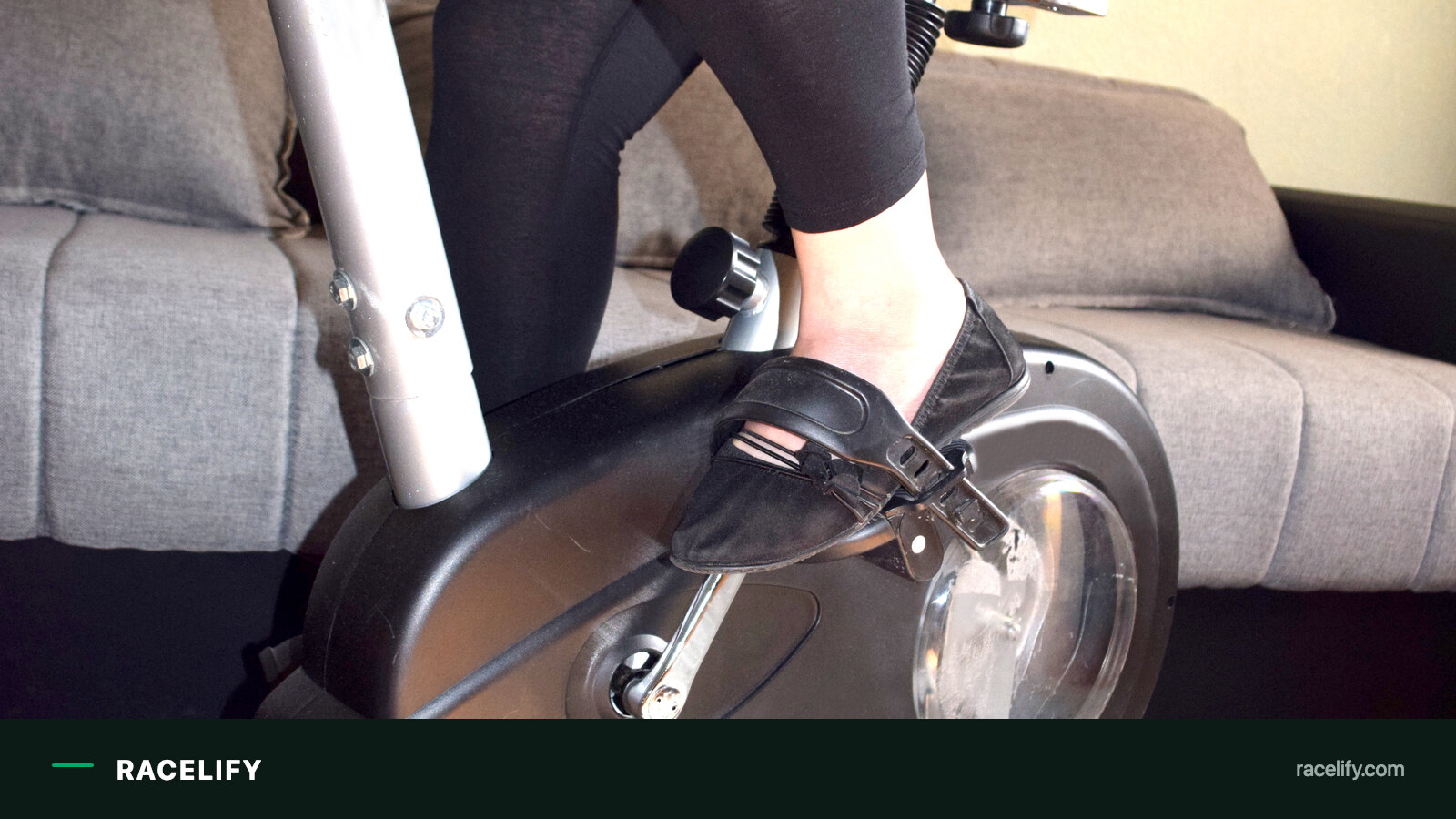
You don’t need a lab or a face mask to know your power threshold. You need a turbo trainer, 20 minutes of pain, and a bit of discipline in the first five minutes, because that’s usually where the whole test falls apart.
What FTP Is, and Why the Number Matters
FTP (Functional Threshold Power) is the power you could theoretically hold for an hour of effort at the edge of your endurance. It’s your reference point: you calculate training zones from it, plan intervals around it, and use it to judge whether training is actually working.
Without a current FTP you’re guessing, in both directions. An FTP set too high hands you wattage targets you can’t sustain, so every session ends up too hard, a direct route to overtraining. Set too low, and sessions end up too easy to change anything.
The Allen-Coggan Method: 95% of 20 Minutes
A true FTP test would take an hour, and few riders have the patience or the pacing discipline for that. That’s why the industry standard is a shortened version: 20 minutes of maximum, even effort, with the result multiplied by 0.95. That multiplier corrects for the fact that a twenty-minute effort draws a bit extra from anaerobic reserves you couldn’t hold for a full hour.
Step-by-Step Protocol
- Warm-up (15 to 20 min). Easy riding, with 2 to 3 short one-minute accelerations at a high cadence in the middle, to wake the legs up without tiring them.
- 5 minutes hard, then 10 minutes easy. This short, intense effort empties the anaerobic reserve so it doesn’t feed into the twenty-minute effort. It’s the reason the 0.95 multiplier holds up at all. Ten minutes of easy riding afterwards is part of the protocol, not an optional suggestion.
- 20 minutes all-out. The most important rule: don’t go out too hard in the first 5 minutes. The same mistake ruins almost every test result, starting too aggressively and fading in the second half. It’s better to start slightly below your perceived maximum and lift the pace in the final 5 minutes.
- Record your average power for the full 20 minutes. Not from a segment, not from the “best” minutes. The whole effort.
- Calculate FTP = average power × 0.95.
Where to Do It
A smart trainer (Wahoo, Tacx, Elite) paired with a training app gives the most repeatable conditions, without wind, traffic lights or descents disrupting the evenness of the effort. Zwift, TrainerRoad and Wahoo SYSTM all have ready-made FTP test workouts with automatic scoring, so you just start one and follow the on-screen instructions.
Worth knowing: TrainerRoad has since moved in a different direction. Its default test is now a ramp test, and its default path is AI FTP Detection, which calculates FTP from your completed workouts and lets you skip a dedicated test altogether. A new value becomes available every 28 days. The twenty-minute test is still there, and still reliable, but it’s no longer the only route to the number.
A road test also works, but it needs a flat, long stretch without intersections, ideally in still air.
Common Mistakes
- Testing after a hard training week. Tired legs produce a lower result and wrong zones for the weeks that follow. Test after 1 to 2 days of lighter training.
- Watching the power meter every second. Momentary power swings are normal, focus on perceived effort (RPE), not every flickering number.
- Retesting too rarely. FTP shifts with fitness, so after 6 to 8 weeks of solid training it’s worth repeating the test to keep your zones accurate.
- Comparing cycling FTP to running threshold. These are two different physiological values measured by different methods, don’t set them side by side as if they were equal.
Remember this is an estimate, not a lab measurement of VO2max or blood lactate threshold. For amateur training, it’s more than enough.