
Suunto Race S: A Smaller, Cheaper AMOLED Watch
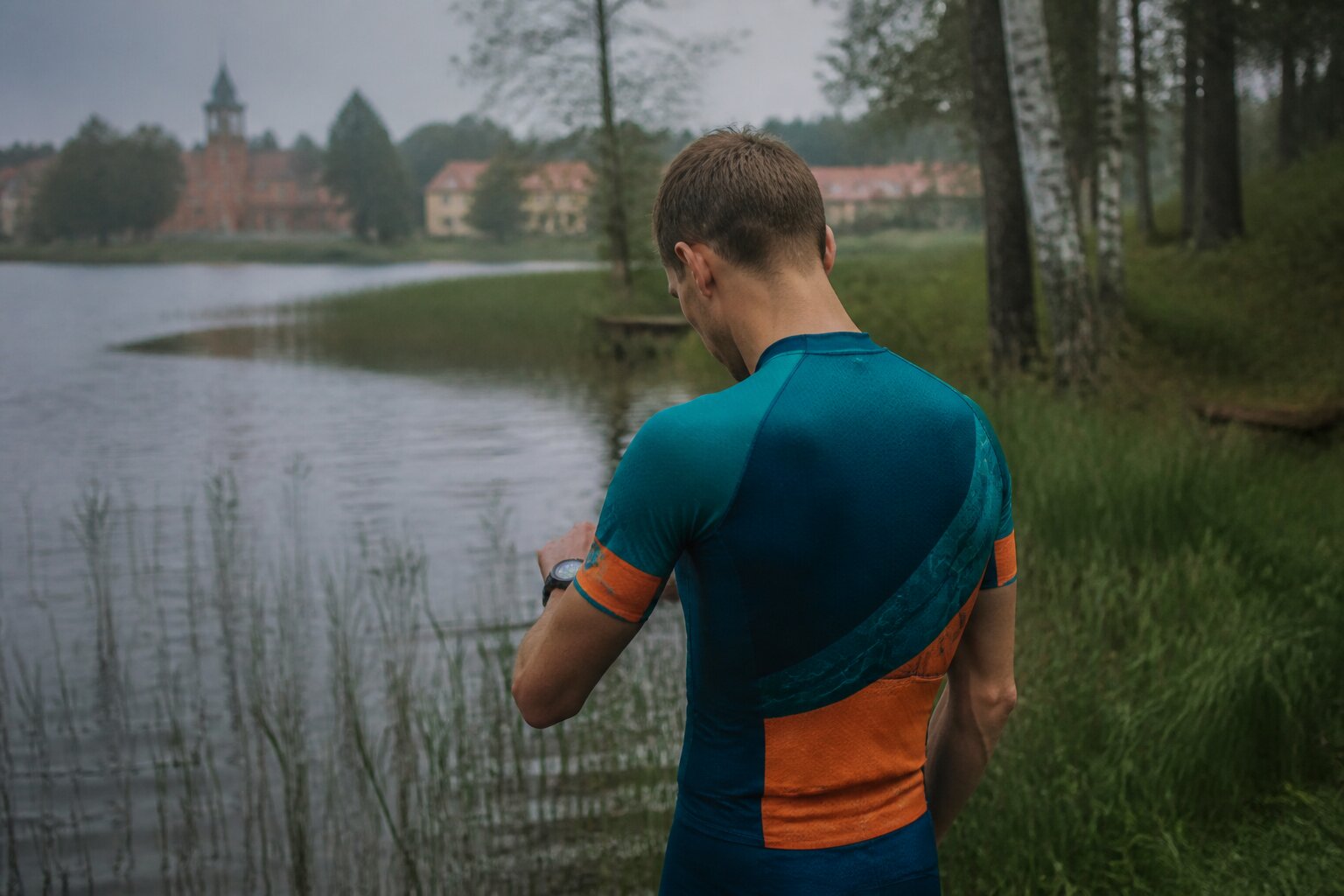
Not everyone wants a 49-millimetre flagship watch on their wrist at flagship prices. The Suunto Race S is the answer for anyone after a bright AMOLED screen, dual-band GPS and offline maps, in a smaller case and for reasonable money. Suunto sells it for $349 in the US. Here is whether it’s a good choice for triathlon.
Specs: flagship internals in a smaller body
The Race S is a trimmed-down version of the Race. The key specs:
| Parameter | Suunto Race S |
|---|---|
| Case / screen | 45 mm, AMOLED 1.32″, 466 × 466 px |
| Weight | about 60 g (steel bezel); titanium version about 53 g |
| GPS | dual-band |
| Battery | up to about 12 days in watch mode; about 30 h dual-band GPS, about 40 h in all-systems mode |
| Storage / maps | 32 GB, offline maps |
| Water resistance | 50 m |
| Controls | crown + touchscreen |
The key advantage: dual-band GPS and an AMOLED screen were, until recently, reserved for the pricier end of the market. Here they come in a 45 mm watch that sits well on a smaller wrist.
How it performs in triathlon
The Race S has a multisport mode, so all three disciplines and the transition zone are handled without extra fuss. Dual-band GPS is a real advantage running between buildings or riding through wooded terrain, the signal holds more steadily than on single-band units. In independent testing, distance tracking stayed within an acceptable margin of error against a pricier Garmin.
Offline maps on board are a convenience easy to underrate until getting lost on a new bike route. Battery life, about 30 hours in the most accurate GPS mode, comfortably covers a full race day, with plenty of margin for a long training session or even a 70.3.
What it does not offer
To be fair, the Race S is not a Garmin killer on every front. Suunto’s training ecosystem and data analysis are simpler than Garmin’s more elaborate metrics, such as Training Readiness or detailed load analysis. Anyone living by structured plans and deep analytics may find it thin. Suunto makes up for it with maps, build quality and price.
Verdict: who is it for
Who it suits: an age-grouper who wants a bright AMOLED screen, solid GPS and offline maps without overpaying, especially if flagship watches feel too big on the wrist. It’s one of the more sensible triathlon watches at this price.
Less for: athletes who depend on advanced analytics and a rich app ecosystem, where Garmin or COROS offer more tools.
Where to buy it and what it costs
The Race S is also sold through Decathlon, with delivery and a 365-day return window.
For anyone who finds the Race S too much or too little watch, the rest of the Suunto range runs from the cheaper Run to the larger Race and the endurance-focused Vertical:
| Model | Who it suits |
|---|---|
| Suunto Run | A first, lightweight running watch, the cheapest option, $199 in the US |
| Suunto Race S | AMOLED, dual-band and maps in a compact 45 mm case, $349 in the US |
| Suunto Race | Larger 49 mm case and longer battery life |
| Suunto Vertical | Ultra/outdoor use, solar charging and maximum battery |