
Round Bottles Are a Parachute on Your Time Trial Bike
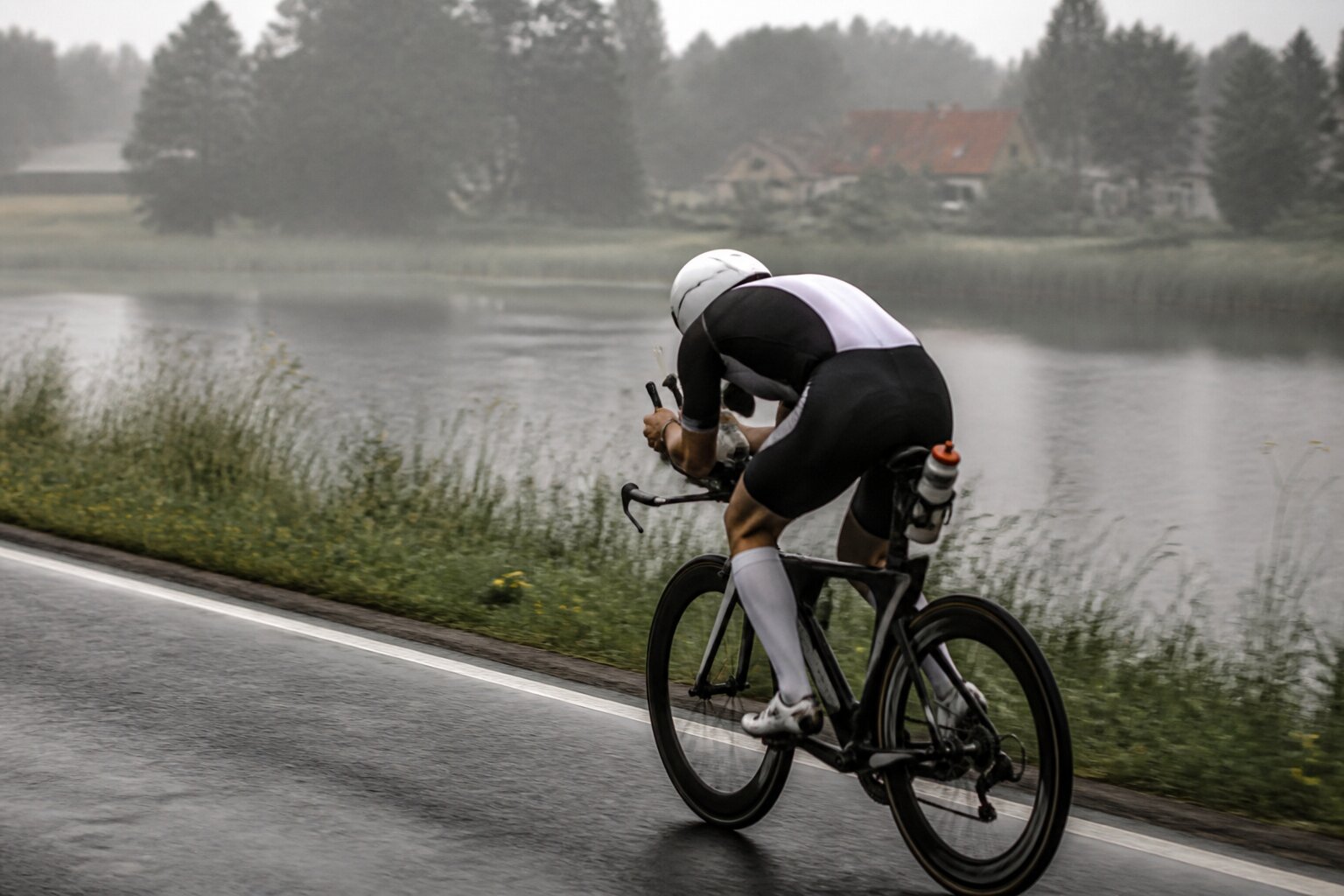
A round bottle wedged into a classic frame cage can cost you several watts, and over 70.3 or full IRONMAN distance that adds up to real minutes lost. The problem is you still have to drink. So the question is not whether to carry fluid, but where and in what.
A well-chosen hydration setup can be aerodynamically neutral, and in some cases acts like a fairing that makes you faster than riding with a bare frame. Here is how to approach it properly.
Why bottle position matters
On a time trial bike, your body position generates most of the aerodynamic drag, around 80%. Second in line is the zone around the frame, components and your hands. An ordinary round bottle sitting across the airflow acts like a small parachute.
Rather than take manufacturer marketing at face value, it is worth looking at the numbers. The figures below come from independent wind-tunnel testing, including the San Diego Wind Tunnel commissioned by tech outlet AeroGeeks, and from technical documentation published by frame makers Cervélo and Specialized.
Results are calculated for a standard race speed of 40 km/h:
| Bike setup and bottle position | Loss / gain in watts | Estimated time over 180 km |
|---|---|---|
| No bottles at all | 0 W (baseline) | n/a |
| BTA system (horizontal, between the forearms) | Gain: ~1.5 W | About 35 to 45 seconds faster |
| Behind the saddle (two bottles, vertical) | Loss: ~0.2 W (neutral) | Negligible, under 5 seconds |
| On the frame, down tube, round bottle | Loss: ~5.6 W | About 2 minutes 15 seconds slower |
| On the frame, seat tube, round bottle | Loss: ~7.2 W | About 3 minutes slower |
| Dedicated profiled frame bottle | Loss: ~1.5 W | About 35 seconds slower |
The golden rule: stay in the aero position
The main lesson from these tests is not only about the drag of the bottle itself. What matters most is that you have to be able to drink without breaking the aero position. Every time you sit up to grab a bottle and put it back on the frame, you lose real time and break your pedalling rhythm. If your setup forces you to keep sitting up on the saddle, you are giving back exactly the minutes you paid for when you bought a time trial bike or clip-on bars.
Three zones for mounting bottles
Wind-tunnel engineers have tested three sensible locations for years. Each solves a different problem.
Between the arms: BTA
The clear number one, and the default choice for any triathlete. The system mounts directly on the aerobar extensions, and you drink through a straw without lifting your head out of the aero position.
Independent testing confirms a genuine paradox: a bike with a bottle mounted this way is aerodynamically faster than a completely bare bike. The bottle fills the empty space between the arms and acts like a fairing, smoothing the airflow that would otherwise hit the rider’s chest.
Proven systems include the Profile Design FC series (FC25, FC35) and the A2, integrated setups with a straw, a mount for a bike computer and a dedicated pocket for gels. At the premium end, the XLAB Torpedo system uses a carbon or composite mount with excellent stability and a retractable straw that does not flap in front of your face in the wind.
Behind the saddle: your rear reservoir
The classic answer for a second and third bottle on long distances, 70.3 and full. In the wind tunnel this zone is usually neutral, because the bottles sit in the aerodynamic shadow of your thighs and glutes, generating only minimal turbulence when properly tucked away.
The XLAB Carbon Wing and Delta series are the market benchmark for this position. Rear cages can also act like a catapult under centrifugal force on rough roads: mount them as close to vertical as possible and use only models with a firm grip. A lost bottle costs you your fuelling plan and risks a littering penalty on the course.
On the frame: when a profiled bottle makes sense
An ordinary round bottle on the frame is an aerodynamic problem, especially on the seat tube, where the air is already turbulent from the rider’s legs. If your time trial bike has no integrated storage, a dedicated profiled bottle is the only fix.
The Elite Crono CX is the proven option: a flattened, dedicated bottle with a matching cage that blends into the frame’s lines and minimises turbulence, recovering most of the lost watts.
What else to look for in a bottle
Choosing the position is half the job. The bottle itself has to hold up on practical and health grounds too:
- Fast-fill system: essential for clip-on setups on long distance. You need to be able to pour water from a bottle handed over at an aid station without stopping or unscrewing a cap, just tipping the liquid through a mesh or valve on the move.
- Clean materials, BPA and phthalate free: cheap plastic in full sun releases toxins and can leave an isotonic drink tasting off after two hours. Look for BPA- and phthalate-free labelling, ideally polypropylene.
- Anti-odour technology: good brands use internal coatings, often with silver ions or a silicone layer, so a bottle forgotten after a Sunday ride does not grow black mould inside.
- Soft nozzle and easy grip: at a high heart rate you do not want to fight stiff plastic. The bottle should be soft enough that one squeeze gives a strong flow, with a rubber nozzle to protect your teeth over rough ground.
How to set up your bike
- Racing sprint or Olympic distance? One front system between the extensions is enough. Over a 40 km bike leg, you do not need to carry a warehouse of fluid.
- Racing 70.3 or full IRONMAN? Start with a front bottle as your main source, and add a rear system behind the saddle as a reservoir. At an aid station, grab a fresh bottle, top up the front reservoir, and drop the empty in the litter zone. The frame stays clean and slippery through the air.
Three products that work in the aero position
Three specific products that handle mounting, holding and drinking in the aero position well.
| Product | Price | Position | Who it is for |
|---|---|---|---|
| Profile Design Axis Grip Kage | $35.25 | Front / cockpit | Triathletes building a clean front end. Holds the bottle firmly and has an integrated mount for a Garmin computer between the aerobar extensions. |
| Van Rysel Carbon 900 bottle cage | €24.99 | Behind saddle / frame | Light, 25 g, stiff carbon cage. Answers the problem of bottles ejecting behind the saddle on rough roads. |
| Van Rysel FastFlow M 650 ml bottle | €5.99 | Any, front or rear | Fitted with a valve that stops drips onto the frame and drivetrain, with a wide flow for quick drinking at a high heart rate. |
The bottom line
Optimising a bike’s hydration setup is not about buying the most expensive gadgets, it is about removing guesswork. The wind-tunnel numbers show clearly that one badly placed round bottle can undo the effort behind an aero frame or helmet. Building a system for 70.3 or full IRONMAN, start with a base between the forearms, and keep any extra litres tucked in the aerodynamic shadow behind the saddle.
The next piece of the same puzzle is Garmin Edge 1060: The First AI Bike Computer, Maybe. When the training is ready for a start line, Racelify lists cycling events.