
Deep Water Start: A Guide to the First 200 Metres
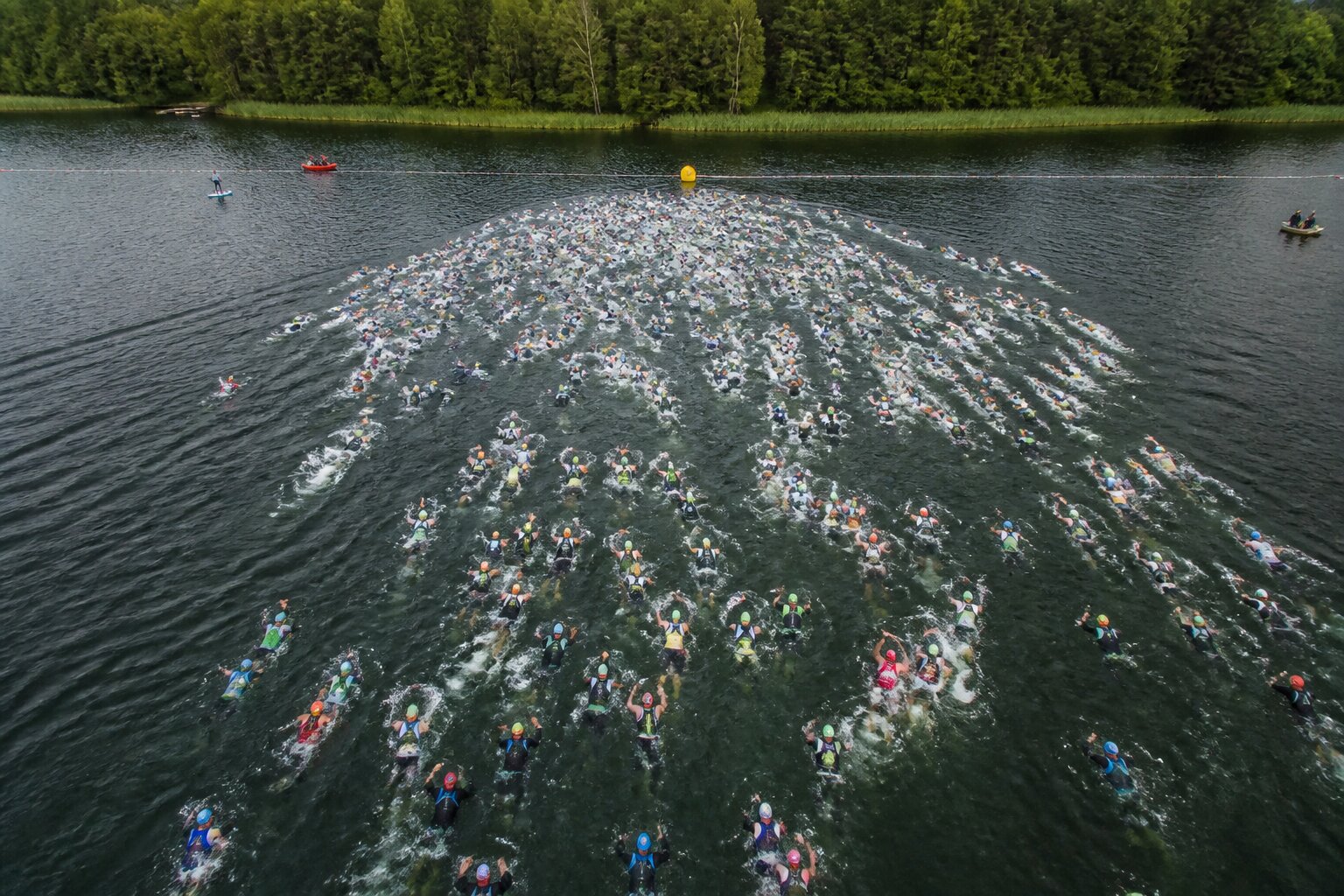
The most stressful minute of an entire triathlon doesn’t happen at the 180th kilometre of the bike leg, or in the closing stretch of the marathon. It happens at the start, when you’re standing, or really floating, in the water with a hundred other people about to swim straight through you. A deep water start, one with no ground under your feet, is a skill nobody teaches in a pool. And it decides whether you swim the first 200 metres in rhythm or in panic.
First, the decision: where to line up
Before you swim a stroke, you need to make a tactical call, and an honest one about your own level. You have three options:
- Front, aggressively: for genuinely fast swimmers. If you can’t hold a strong pace in the pool, don’t push in here. You’ll get swum over and lose your composure at the start.
- Mid-pack, for the draft: a good compromise if you can hold onto a faster swimmer’s feet.
- Side or back, calmly: the smartest choice if open water stresses you out. You avoid the washing machine of the main group, at a cost of only a few seconds.
The key rule: line up according to the truth about yourself, not your ambition. Too far forward and you’ll get trampled. Too far back and you’ll be stuck behind slower swimmers, passing them for half the distance.
How to wait upright without wasting energy
Waiting for the gun in deep water is its own skill. Don’t thrash your legs like you’re treading water in a rescue drill: you’ll tire yourself out before the start even happens.
Stay on the surface with calm figure-eight sculling movements of your hands underwater, with your body tilted slightly forward. This is the most important detail: the closer to horizontal you are right before the start, the easier it is to get moving. The switch to swimming from a horizontal position is much faster than launching from vertical.
One more trick: keep your hands spread wide as you scull in front of you. It creates space around you and discourages other swimmers from crowding in beside you. A bit of elbows, in the good sense of the word.
The first metres: survival mode, not race mode
When the gun goes, don’t go straight to 100%, but don’t hesitate either. The first metres are controlled aggression: a short, faster surge to find clear water and avoid getting pushed into the middle of the pack.
In this phase, change two things about how you swim:
- Sight more often: lift your eyes every few strokes to spot gaps in the crowd and correct your position.
- Breathe on both sides: bilateral breathing lets you track who’s swimming next to you and where it’s getting less crowded.
This isn’t the moment for picture-perfect technique. It’s the time to get through the chaos in one piece without losing your head when someone taps your heel or swims over your arm. Expect the contact, and it won’t catch you off guard or trigger panic.
Around 150 to 200 metres: switch into race mode
The good news: the chaos doesn’t last long. After about 150 metres the group starts to spread out as everyone settles into their natural pace. This is the moment you’re waiting for, the switch from survival mode into race rhythm.
This is where the most valuable open water skill comes in: drafting. Sit right off another swimmer’s feet, or slightly off their hip, on the diagonal. In that water shadow, drag can drop by anywhere from around ten to several tens of percent, and your energy cost at the same speed goes down for real. Find someone a little faster than you and hold their feet.
One catch that’s easy to forget: drafting only works if the swimmer in front is swimming straight. If they drift off course, you drift with them. So keep sighting even while drafting, checking that your locomotive is actually on the right line.
How to train for it before the season
You practise a deep water start in open water, not in a pool, but there are a few things you can prepare in advance:
- Sculling and vertical positioning: practise in deep water until holding position without thrashing your legs feels effortless.
- Starts from a standstill: get into a lake, position yourself horizontally, and push from zero to a strong pace a few times. It’s a completely different effort from pushing off a pool wall.
- Swimming in a group: if you train with others, practise starts together. Contact, taps, swimming on someone’s feet, the less unfamiliar it is, the calmer your head will be on race day.
A deep water start isn’t about strength. It’s about composure and a handful of technical habits. Master them, and the first 200 metres stop being the worst part of your triathlon, and you’ll come out of the water with a heart rate that won’t wreck the rest of your race.
More on this: How to Start Triathlon Training: A Beginner’s Guide. Racelify lists open water swims with dates and organiser links.