
CORE 2: Turning Body Heat Into a Training Tool
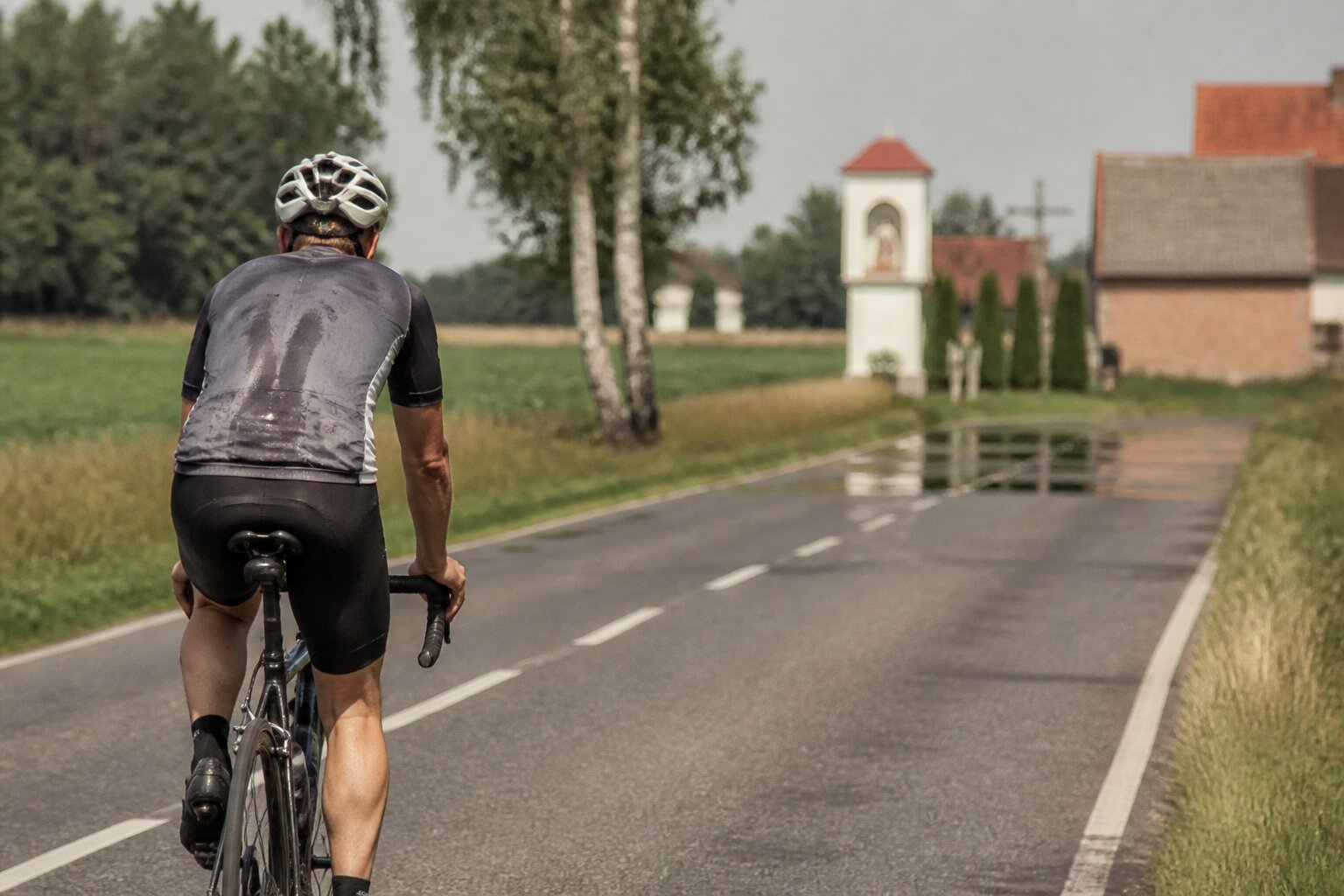
In summer, your power doesn’t drop because “you’re having an off day.” It drops because core body temperature crosses the threshold where the body starts protecting itself. CORE 2 is a sensor that shows that temperature in real time, turning heat acclimation from guesswork into a controlled training input.
What it actually measures, and how
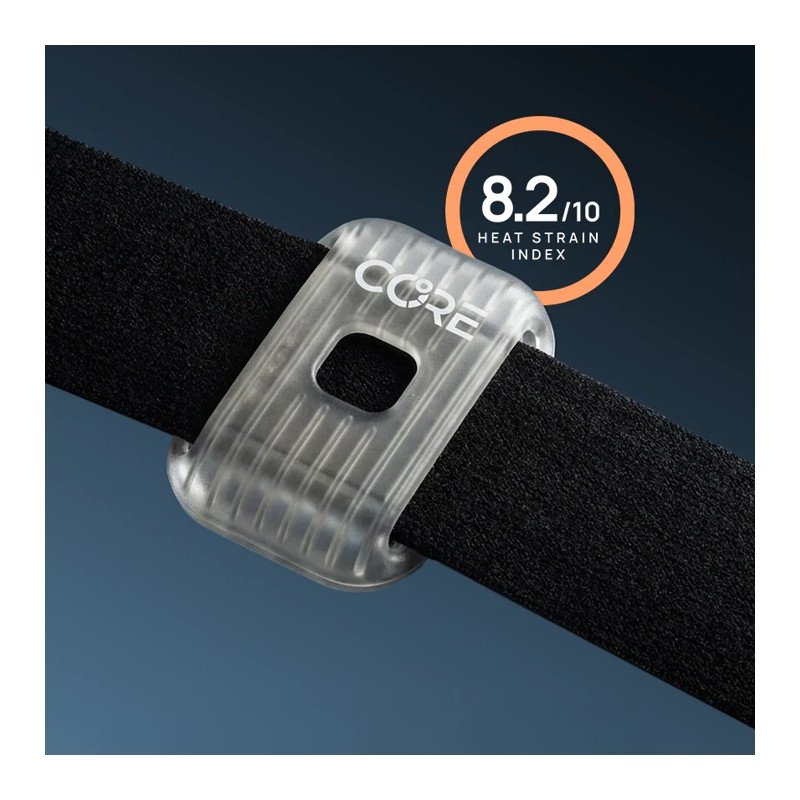
CORE doesn’t insert a thermometer inside you. You wear the sensor on a heart rate strap or stuck to your chest, and it calculates core temperature from heat flow through the skin (thermal energy transfer technology from Swiss company greenTEG) plus an algorithm trained on large measurement datasets. It’s an estimate, not an invasive measurement, but the manufacturer states an accuracy confirmed by studies (average difference in the range of -0.01°C to +0.23°C) and validation for running and cycling.
The second generation is simply more comfortable: 48% smaller and 30% lighter than the original CORE. It moves around less, and you notice it less. Data reaches your watch or bike computer over Bluetooth and ANT+, and the sensor works with Garmin, Wahoo, COROS and Suunto, plus Apple Watch and Wear OS (and, on the computer side, Hammerhead too). In practice, that’s whatever is already on your wrist or handlebars.
What core temperature is for, if you’re a triathlete
Two concrete uses.
First: safe pacing in the heat. As core temperature climbs toward around 39°C (102°F), performance drops sharply and the risk of overheating rises. CORE shows you when to back off before you cook yourself on a 70.3 course at midday in July. That’s the difference between a strong run and a march from aid station to aid station.
Second, and more interesting: heat acclimation as training. Deliberately raising core temperature and holding it in an “acclimation zone” for several days to a couple of weeks produces adaptations similar to altitude training: increased plasma volume and haemoglobin mass. In a classic study by Lorenzo and colleagues (Journal of Applied Physiology, 2010), ten days of heat acclimation improved cyclists’ time trial performance by about 8%, in both heat and cool conditions. CORE turns that protocol into a numbers game: you can see whether you’re actually in the zone, instead of guessing from how much you’re sweating.
Is it worth it, and for whom
To be honest, this isn’t essential kit. If you’re struggling to fit in three sessions a week, don’t buy a temperature sensor, buy consistency instead. CORE 2 makes sense once you’re preparing for a start in a hot climate (Lanzarote, Nice, any IRONMAN in July) or when you treat heat acclimation as a real performance lever rather than a curiosity.
The price cools the enthusiasm: 269.95 CHF (about 285 EUR) from the official store. Authorised resellers list it at much the same price. That’s the cost of a decent watch, for one narrow function.
Verdict: a great tool for a very specific job. If your season centres on hot summer races and you want to approach acclimation deliberately, CORE 2 gives you numbers heart rate alone won’t show you. For most amateurs, though, it’s a “later, once everything else is dialled in” gadget.